Steel H Frame Scaffolding Guide: Components & Structural Details | TSL
Discover how steel h frame scaffolding works. Explore key components, bracing systems, and structural details to select the right scaffolding for your project.
Behind every safe and efficient construction site is a carefully designed support structure that ensures workers can operate at height with confidence. While scaffolding systems may appear simple from the outside, their performance depends on the precise design of each component, from the main frames and braces to the connection points and load-supporting elements.
Among various temporary access solutions, steel h frame scaffolding remains widely used because of its practical structure, straightforward assembly, and reliable support capability. However, understanding why this system performs well requires more than knowing its basic appearance. The real value lies in the relationship between each component and how these parts work together to maintain stability under different construction conditions.
By exploring the key h frame scaffolding details, including frame structures, bracing systems, connection methods, and design features, contractors can better understand how to select, install, and evaluate scaffolding systems for their projects. This guide explains the internal structure of steel h frame scaffolding and the factors that influence its strength, safety, and long-term performance.
As a professional scaffolding solution provider, TSL Scaffolding focuses on delivering reliable scaffold products designed for practical construction applications. Understanding the structural principles behind H frame scaffolding helps users make more informed decisions when choosing suitable support systems.
An Overview of Steel H Frame Scaffolding Structure and Design Principles
Steel h frame scaffolding is a prefabricated scaffold system that uses H-shaped frames as the primary supporting structure. These frames are connected through horizontal members, cross braces, platforms, and other accessories to create a stable temporary working platform for construction activities.
The main design principle of H frame scaffolding is to achieve a balance between structural strength, installation efficiency, and practical usability. The H-shaped frame configuration provides vertical load support while maintaining a rigid structure that can withstand common construction forces.
Compared with more complex modular scaffolding systems, H frame scaffolding is recognized for its simple design and efficient assembly process. Standardized components allow workers to install and dismantle the system quickly, making it suitable for applications such as residential construction, commercial buildings, maintenance projects, and general building work.
The performance of steel h frame scaffolding depends on the interaction between all structural components. The frames provide the primary load-bearing function, while braces, connectors, and platforms improve overall rigidity and working safety.
For contractors evaluating different scaffold structures, selecting suitable scaffolding products and construction support solutions helps ensure that each component matches project requirements and working conditions.
Key Structural Components That Define Steel H Frame Scaffolding Systems
Understanding h frame scaffolding details requires examining the individual components that form the complete system. Each part has a specific role in supporting loads, maintaining alignment, and improving scaffold stability during construction operations.
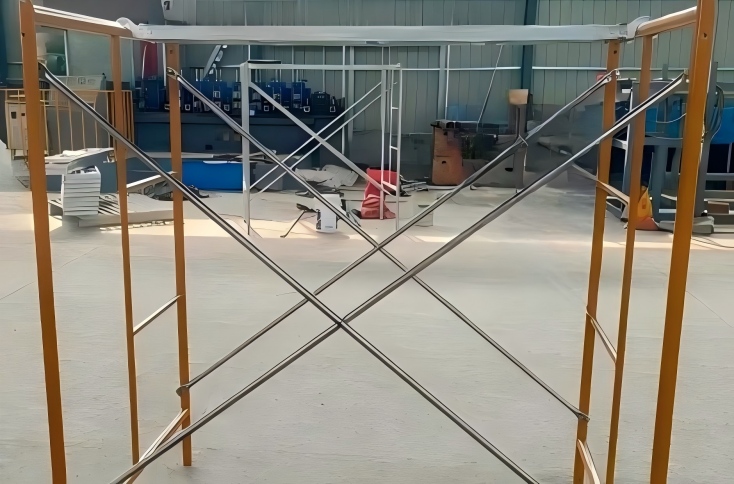
The H-shaped frame is the main structural component of steel h frame scaffolding. It consists of two vertical steel tubes connected by horizontal members, creating a rigid frame that supports working platforms and transfers loads toward the foundation. The quality, dimensions, and manufacturing accuracy of these frames directly influence the overall strength of the scaffold.
Horizontal connectors are another important part of the system. They connect multiple H frames together and maintain consistent spacing between vertical supports. By improving structural continuity, these components help reduce unnecessary movement and increase the overall rigidity of the scaffold structure.
Cross braces provide diagonal reinforcement between frames. These components are essential for controlling lateral movement and improving resistance against external forces. Properly installed braces help maintain the designed geometry of the scaffold and contribute to safer working conditions.
Working platforms and walk boards provide the necessary surface for workers, tools, and construction materials. These components must be properly supported and securely positioned to maintain safe access during construction activities.
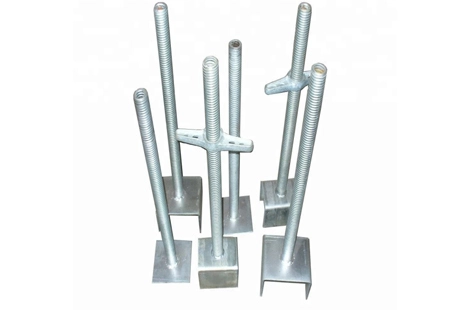
Base supports connect the scaffold structure with the ground. Components such as base plates and adjustable supports help distribute loads effectively and provide a stable foundation for the entire scaffold system.
| Component | Main Function | Role in Steel H Frame Scaffolding |
|---|
| H-shaped frame | Provides main vertical support | Determines the basic load-bearing capability of the scaffold |
| Horizontal connectors | Connect individual frames | Improves alignment and structural rigidity |
| Cross braces | Provides diagonal reinforcement | Reduces lateral movement and improves stability |
| Working platforms | Creates working surfaces | Supports safe access for construction activities |
| Base supports | Transfers loads to the ground | Improves foundation stability and load distribution |
How Individual Components Work Together to Improve Scaffold Stability and Load Distribution
The stability of steel h frame scaffolding is not determined by a single component. Instead, it relies on the coordinated performance of frames, braces, connectors, platforms, and base supports working together as one complete structure.
The H frames carry the primary vertical loads created by workers, equipment, and construction materials. These forces are transferred downward through the vertical members and eventually distributed to the ground through the base support system.
Horizontal connectors help maintain the correct distance between frames and improve the overall connection strength of the scaffold. Without proper connections, individual frames may experience unwanted movement, reducing the stability of the entire structure.
Cross braces strengthen the scaffold by improving resistance against horizontal forces. They help prevent excessive sway and maintain the original structural shape during construction activities.
These h frame scaffolding details show why every component must work together correctly. A well-designed scaffold system depends not only on material strength but also on proper component compatibility, accurate installation, and regular inspection.
Design Features That Affect the Strength and Performance of H Frame Scaffolding
The strength and performance of steel h frame scaffolding are influenced by several design factors, including material quality, frame structure, connection accuracy, and overall system configuration. Understanding these factors helps contractors evaluate whether a scaffolding system can meet the requirements of different construction environments.
Material selection is one of the most important elements affecting scaffold performance. High-quality steel provides better resistance against compression, bending, and repeated loading conditions. Since H frame scaffolding is commonly reused across multiple projects, durable materials also contribute to longer service life and consistent performance.
The dimensions and design accuracy of the H frame directly influence structural stability. Properly manufactured frames maintain consistent geometry, allowing different components to connect correctly and ensuring that loads are transferred evenly throughout the scaffold structure.
Connection design is another important factor in h frame scaffolding details. Secure connections between frames, braces, and horizontal components reduce unnecessary movement and improve the rigidity of the complete system. Poorly matched or improperly installed components may weaken the scaffold performance even when individual parts are made from strong materials.
The overall configuration of the scaffold also affects performance. Factors such as scaffold height, working platform arrangement, support spacing, and installation environment should all be considered when planning a safe and efficient scaffold structure.
For this reason, contractors should evaluate not only individual components but also how the complete steel h frame scaffolding system performs under actual working conditions.
Why Bracing Systems and Connection Details Matter in H Frame Scaffold Stability
Bracing systems are essential structural elements that help maintain the stability of H frame scaffolding. While the main frames provide vertical load support, braces improve the scaffold’s ability to resist horizontal forces and maintain structural alignment.
In practical construction environments, scaffolds may experience external influences such as worker movement, equipment vibration, material handling activities, and outdoor conditions. Without effective bracing, these forces may cause unwanted movement or reduce the overall stability of the structure.
One of the most important h frame scaffolding details is the connection between braces and frames. Secure connections ensure that forces can transfer effectively between different components. This creates a more unified structure where each part contributes to overall stability.
Connection quality also influences installation efficiency. Properly designed connection points allow workers to assemble and dismantle scaffolding more efficiently while reducing the risk of incorrect installation.
When selecting steel h frame scaffolding, contractors should pay close attention to bracing design, connection reliability, and component compatibility. These details have a direct impact on scaffold safety, durability, and operational performance.
What to Look for When Assessing Steel H Frame Scaffolding Quality
Evaluating the quality of steel h frame scaffolding requires more than checking the appearance of individual components. A reliable scaffold system should demonstrate consistent manufacturing quality, structural integrity, and compatibility between different parts.
The first factor to consider is material quality. Steel components should have sufficient strength and durability to withstand repeated construction use. The frame structure should remain stable under expected working conditions without excessive deformation.
Manufacturing precision is another important consideration. Accurate dimensions and consistent component design allow frames, braces, and connectors to fit together correctly. This improves installation efficiency and reduces potential stability issues.
Surface protection is also important, especially for scaffolding used in outdoor environments. Proper surface treatment helps improve resistance against corrosion and extends the usable life of the equipment.
Contractors should also evaluate supplier experience and product support. Working with a professional supplier such as TSL Scaffolding helps ensure access to reliable scaffolding components and solutions suitable for different construction applications.
Before selecting a system, users should review important h frame scaffolding details, including frame specifications, connection methods, bracing structure, and compatibility with other scaffold accessories.
Conclusion
As a trusted scaffolding manufacturer with 15+ years of experience, 4 production facilities, and exports to 50+ countries, TSL Scaffolding holds international certifications including UL, FM, CE, SGS, ISO, and CBAM, ensuring every H-frame system meets strict project safety standards.
Steel h frame scaffolding is widely used in construction because of its practical structure, efficient assembly process, and reliable support performance. However, the strength of the system depends on more than the H-shaped frames themselves. Every component, from braces and connectors to platforms and base supports, plays an important role in maintaining scaffold stability.
Understanding h frame scaffolding details allows contractors to make better decisions when selecting, installing, and maintaining scaffold systems. Factors such as material quality, connection design, bracing configuration, and component compatibility all influence the final performance of the structure.
As a professional scaffolding supplier, TSL Scaffolding provides reliable scaffold solutions designed for different construction requirements. Choosing the right system and understanding its structural features can help improve jobsite efficiency, safety, and long-term performance. For project-specific requirements, contractors can contact the TSL Scaffolding team for project consultation to discuss suitable scaffolding solutions.
FAQ
1. What is steel h frame scaffolding used for?
Steel h frame scaffolding is used to create temporary working platforms and access structures for construction, maintenance, renovation, and building projects.
2. What are the main components of H frame scaffolding?
The main components include H-shaped frames, horizontal connectors, cross braces, working platforms, and base support components. Each part contributes to overall scaffold stability.
3. Why are h frame scaffolding details important?
Understanding h frame scaffolding details helps contractors evaluate structural design, component compatibility, installation methods, and overall scaffold performance.
4. How do braces improve H frame scaffolding stability?
Braces provide additional lateral support, reduce scaffold movement, and help maintain the structural shape when the system experiences horizontal forces.
5. What factors affect the quality of steel h frame scaffolding?
Important factors include steel material quality, manufacturing accuracy, connection design, surface protection, and supplier reliability.
6. How can contractors choose the right H frame scaffolding system?
Contractors should consider project requirements, working height, load conditions, component compatibility, and product quality before selecting a scaffolding system.
 English
 Español
 português
 العربية