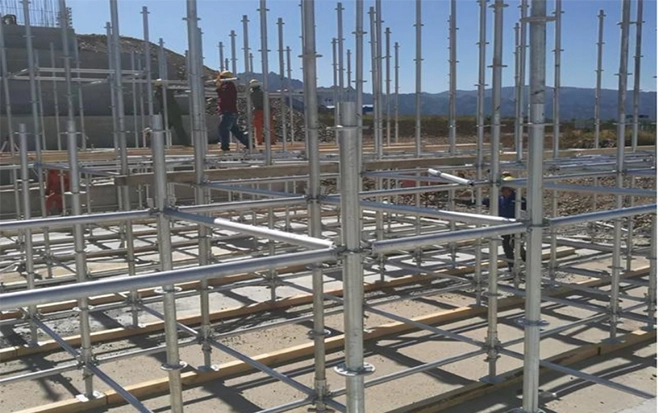
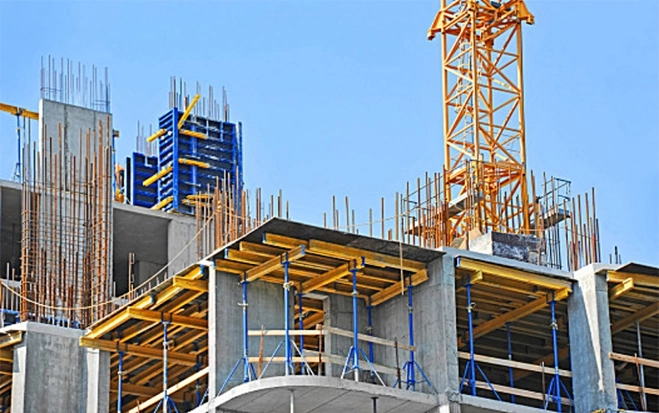
Concrete construction requires accurate load control and stable temporary support systems to maintain formwork performance during pouring, curing, and structural preparation stages. Among the commonly used solutions, adjustable steel shoring props provide flexible height adjustment, reliable vertical support, and efficient load management for different concrete formwork applications.
Unlike fixed-length supports, adjustable steel shoring props can be adapted to different slab heights, structural layouts, and construction environments. Their adjustable design allows contractors to create stable support conditions while reducing the risk of formwork movement, deformation, and alignment problems during critical construction stages.
As an experienced scaffolding solution provider, TSL Scaffolding supplies dependable steel shoring props designed for professional construction applications. By understanding the working principles, structural features, and proper usage methods of these supports, contractors can improve construction safety and achieve better concrete project results.
The Role of Adjustable Steel Shoring Props in Supporting Concrete Formwork Systems
Concrete formwork systems temporarily support fresh concrete before it develops enough strength to carry its own weight. During this period, the formwork structure must withstand multiple loads, including wet concrete pressure, reinforcement materials, construction workers, and equipment used during installation.
Without sufficient support, excessive pressure may cause formwork deflection, movement, or even structural instability. This is why adjustable steel shoring props are widely used as essential temporary support components in concrete construction.
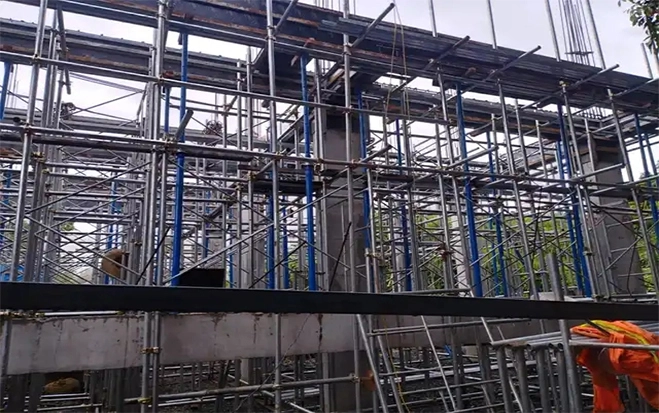
The primary function of steel shoring props is to transfer vertical loads from the formwork system down to the supporting surface. By providing controlled and stable support, they help maintain the designed position of slabs, beams, ceilings, and other concrete structures during construction.
Another important advantage of adjustable steel shoring props is their flexibility. Construction projects often involve different working heights and structural conditions, and adjustable supports allow workers to fine-tune the height according to actual requirements. This adaptability makes them suitable for various formwork systems and temporary support applications.
For contractors evaluating different temporary support options, choosing the right scaffolding and formwork products is essential to match specific project requirements, load conditions, and construction environments. TSL Scaffolding provides professional solutions designed for various concrete support applications.
How Steel Shoring Props Distribute Loads During Concrete Pouring and Curing
During concrete pouring, fresh concrete creates significant temporary loads on the formwork structure. The pressure generated during this stage depends on factors such as concrete volume, reinforcement layout, pouring speed, and construction activities around the formwork.
Steel shoring props help manage these forces by transferring loads vertically and distributing pressure throughout the temporary support system. Properly installed props reduce concentrated stress areas and help maintain formwork stability during the most demanding stages of construction.
The load distribution process continues throughout the curing period. Although concrete gradually gains strength, the formwork system still requires stable support until the structure reaches sufficient strength for safe removal.
| Construction Stage | Main Load Condition | Function of Steel Shoring Props |
|---|
| Concrete pouring | Fresh concrete creates high temporary pressure | Provides immediate vertical support and maintains formwork positioning |
| Concrete vibration | Dynamic forces may influence formwork alignment | Helps reduce movement and improve stability |
| Concrete curing | Structural loads remain while concrete gains strength | Maintains consistent support until removal conditions are achieved |
The adjustable mechanism of modern adjustable steel shoring props allows workers to control support height accurately before installation. This improves load distribution efficiency and helps ensure that temporary structures perform as expected throughout the construction process.
Structural Features That Improve the Stability of Adjustable Steel Shoring Props
The stability and load performance of adjustable steel shoring props depend on their structural design, material strength, and manufacturing quality. High-performance props incorporate several features that help improve safety and durability in demanding construction environments.
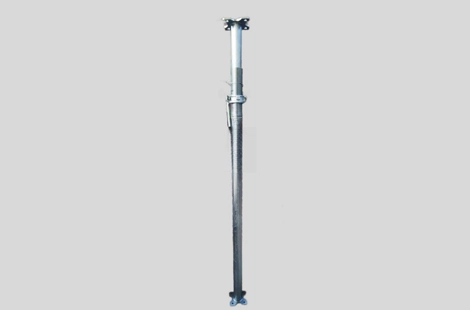
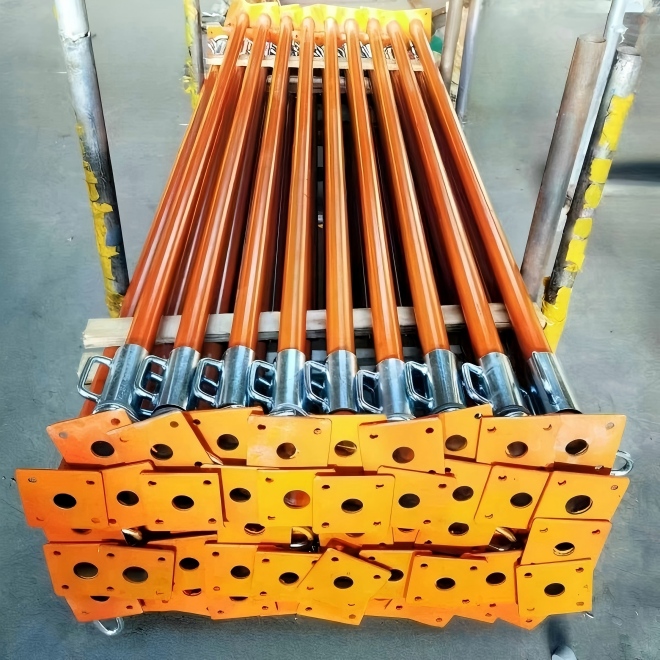
Heavy-duty steel tubes form the main structural body of the prop. Their strong compression resistance allows them to support vertical construction loads while reducing the possibility of bending or deformation. The quality of the steel directly affects the reliability and service life of the support system.
The threaded adjustment section is another important component of steel shoring props. It allows workers to change the support height according to different formwork requirements. This feature improves installation flexibility and enables the same support system to be used across different construction scenarios.
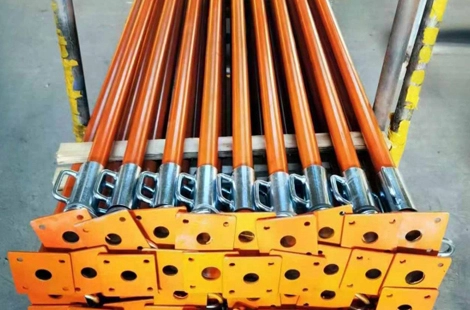
Base plates and top plates also contribute to overall stability by increasing the contact area between the prop and supporting surfaces. A larger contact area helps distribute pressure more evenly and reduces localized stress.
In addition, reliable locking mechanisms prevent unintended height changes during operation. Surface protection treatments can improve resistance against corrosion, helping adjustable steel shoring props maintain performance when exposed to moisture, dust, and changing site conditions.
How Proper Shoring Support Helps Prevent Formwork Deformation and Construction Issues
Formwork deformation is one of the major challenges that can affect concrete construction quality. When temporary support systems cannot effectively handle applied loads, formwork may experience bending, shifting, or uneven settlement, which can influence the final dimensions and surface quality of concrete structures.
Properly installed adjustable steel shoring props help maintain consistent support conditions throughout concrete pouring and curing. By keeping formwork systems stable and correctly positioned, these props reduce the possibility of structural movement and improve construction accuracy.
The correct arrangement of steel shoring props helps prevent several common construction issues. Stable vertical support reduces excessive deflection of formwork panels, improves beam and slab alignment, and minimizes safety risks caused by unstable temporary structures.
However, the effectiveness of shoring support depends not only on product quality but also on correct installation practices. Contractors should ensure that props are installed on stable surfaces, adjusted according to project requirements, and inspected before and during concrete operations.
By combining reliable support equipment with proper construction procedures, teams can create safer working conditions and improve the overall performance of concrete formwork systems.
Key Factors That Affect the Load Performance of Adjustable Steel Shoring Props
The load performance of adjustable steel shoring props is influenced by multiple factors, including material strength, working height, installation conditions, and maintenance practices. Selecting suitable props requires a comprehensive evaluation of the project environment and structural requirements.
Material quality is one of the most important considerations. High-quality steel provides better resistance against compression and deformation, allowing steel shoring props to maintain stable performance under continuous vertical loads.
The extension height of the prop also affects stability. When a prop is adjusted closer to its maximum height, installation accuracy and support arrangement become increasingly important. Proper spacing and correct positioning help ensure that loads are distributed effectively across the entire formwork system.
| Performance Factor | Impact on Load Performance | Recommended Consideration |
|---|
| Steel material quality | Determines strength, durability, and deformation resistance | Select reliable steel shoring systems suitable for construction loads |
| Extension height | Higher extensions may influence overall stability | Choose appropriate working height ranges for each application |
| Installation spacing | Affects how loads are transferred through the support system | Follow engineering requirements and site conditions |
| Ground conditions | Influences the stability of the entire temporary structure | Install on firm, level, and properly prepared surfaces |
| Maintenance condition | Damaged components may reduce load-bearing performance | Inspect and maintain props before repeated use |
Environmental conditions can also influence the service life of adjustable steel shoring props. Regular inspection helps identify corrosion, damaged threads, or structural issues before they affect construction safety.
For contractors requiring dependable temporary support solutions, TSL Scaffolding focuses on providing professional steel shoring props and scaffolding products designed for practical construction applications.
Best Practices for Using Adjustable Steel Shoring Props in Concrete Construction
Proper installation and operation are essential to achieve the expected performance of adjustable steel shoring props. Before installation, every prop should be checked carefully to confirm that components such as steel tubes, adjustment threads, locking parts, and base plates are in good condition.
During setup, workers should adjust the support height according to the formwork design and ensure that each prop stands vertically on a stable surface. Uneven foundations or incorrect positioning may reduce the effectiveness of the support system and create unnecessary risks.
During concrete pouring, the condition of steel shoring props should be monitored to ensure that no unexpected movement or instability occurs. Regular checks help identify potential problems early and allow corrective actions before construction quality is affected.
After completion of the project, proper cleaning and storage are important for extending the service life of reusable props. Removing construction debris, preventing excessive corrosion, and storing components in suitable conditions help maintain long-term performance.
Following these best practices allows contractors to maximize the benefits of adjustable steel shoring props, improve construction efficiency, and maintain safer working environments.
Conclusion
Adjustable steel shoring props play a critical role in improving concrete formwork stability and managing temporary construction loads. Through their adjustable structure, strong steel composition, and reliable vertical support performance, they provide an effective solution for slab, beam, ceiling, and other concrete formwork applications.
By distributing loads evenly and maintaining formwork positioning during pouring and curing, steel shoring props help reduce deformation risks and improve construction accuracy. Their flexibility, durability, and reusability make them an important component in modern construction support systems.
Choosing suitable support equipment and applying correct installation practices are essential for achieving safe and efficient construction results. As an experienced scaffolding supplier, TSL Scaffolding provides professional support solutions for different construction environments. When project requirements involve specific load conditions, support configurations, or formwork applications, contractors can contact the TSL Scaffolding team for project consultation and discuss suitable scaffolding and shoring solutions.
FAQ
1. What are adjustable steel shoring props used for?
Adjustable steel shoring props are temporary vertical supports used to stabilize concrete formwork during construction. They transfer loads safely and help maintain accurate formwork positioning during pouring and curing.
2. How do steel shoring props improve concrete formwork stability?
Steel shoring props provide strong vertical support, distribute construction loads more evenly, and reduce formwork movement or deformation during concrete operations.
3. Why are adjustable steel shoring props preferred over fixed supports?
Adjustable steel shoring props offer flexible height adjustment, allowing contractors to adapt the support system to different slab heights, structural designs, and construction conditions.
4. What factors affect the load capacity of steel shoring props?
The main factors include steel material quality, extension height, installation spacing, ground stability, and maintenance condition. All of these influence the overall load performance of the support system.
5. How can contractors maintain adjustable steel shoring props?
Contractors should inspect props before use, clean them after projects, protect them from excessive corrosion, and replace damaged components when necessary.
6. Can steel shoring props be reused for multiple construction projects?
Yes. High-quality steel shoring props are designed for repeated use when they are properly maintained, stored, and operated according to construction safety requirements.
 English
 Español
 português
 العربية