Introduction
Concrete formwork accounts for a significant share of labor and material cost on many construction sites. The choice of formwork system affects pour quality, cycle time, labor requirements, and the number of reuses possible before replacement. For contractors working on commercial buildings, residential developments, and infrastructure projects, a modular steel frame formwork system can provide a balance of strength, speed, and reuse value.
Steel frame formwork combines a rigid steel frame with a form-facing panel to create a reusable concrete forming system. Taishenglan's steel frame formwork is designed for walls, columns, foundations, and other structural elements. This article explains how the system works, where it is used, and what buyers should evaluate when selecting formwork for a project.
What Is Steel Frame Formwork?
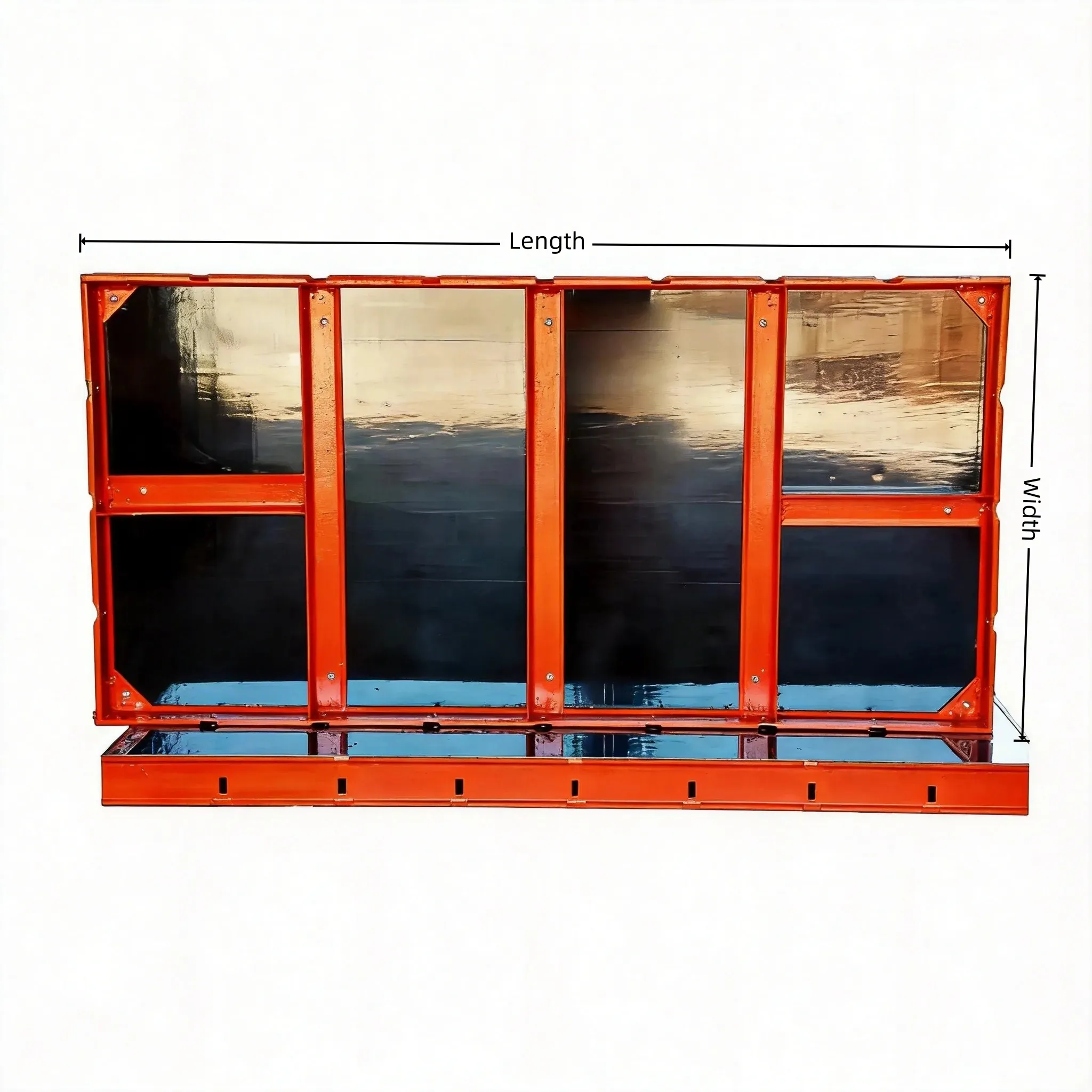
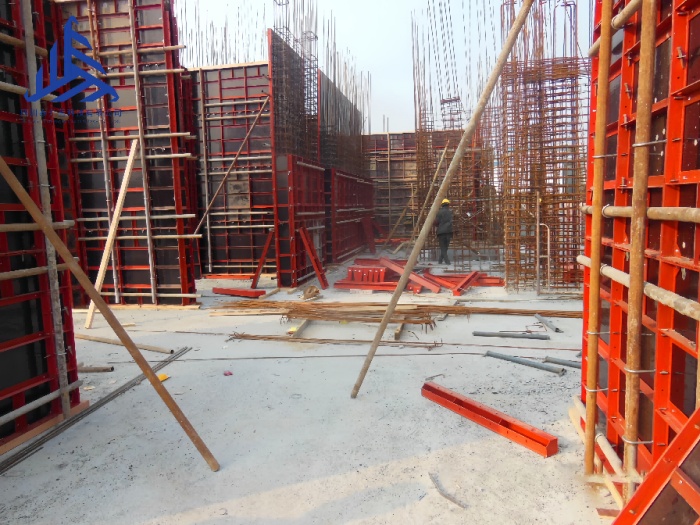
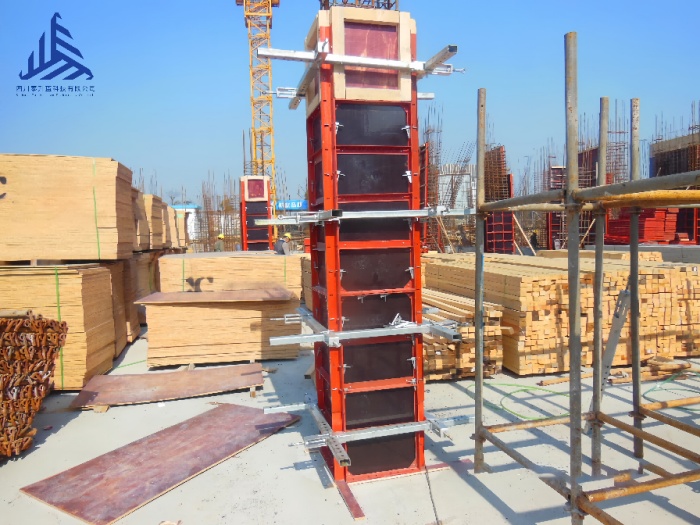
Steel frame formwork is a modular concrete forming system in which a high-strength steel frame supports a facing panel. The facing panel is typically plywood, steel, or a composite material, while the steel frame provides structural rigidity and protects the panel edges from damage during handling and pouring.
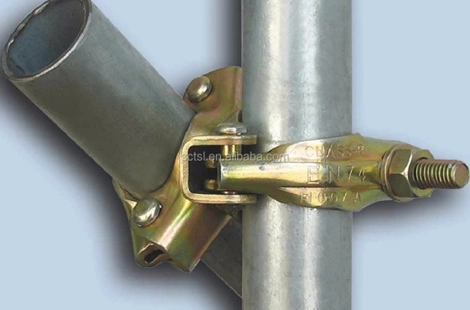
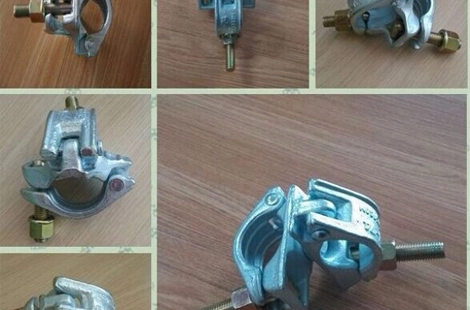
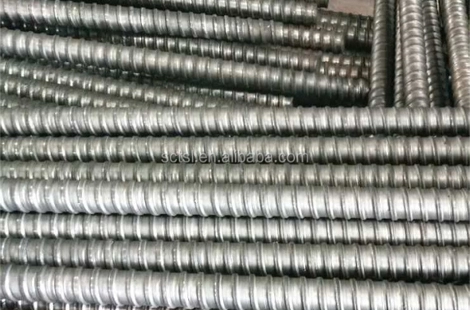
Taishenglan's steel frame formwork system includes standardized panels and connection accessories such as wedge pins, adjustable clamps, and tie-rods. The modular design allows panels to be connected in different configurations to form walls, columns, slabs, and foundations. Because the steel frame can be reused many times, the system is commonly used on projects where multiple pours are required.
Key Features and Advantages
The main benefits contractors look for in steel frame formwork include:
High load-bearing capacity: The steel frame is designed to withstand the pressure of fresh concrete without bending or distortion, reducing the risk of blowouts or dimensional errors.
Reusability: The steel frame protects the facing panel and allows the system to be reused across many pour cycles, lowering material cost per square meter over the project life.
Fast assembly and stripping: The modular panels and standardized connection accessories require minimal tools and training, which can shorten the construction cycle.
Smooth concrete finish: Rigid frames and tight panel joints help prevent slurry leakage, producing a flat concrete surface that reduces the need for secondary finishing.
Corrosion resistance: Frames are available with painted or hot-dip galvanized finishes to withstand outdoor conditions and repeated handling.
Versatility: The same panel system can be configured for walls, columns, foundations, retaining walls, and basement structures.
Main Applications
Steel frame formwork is used in cast-in-place concrete construction where repeatability and dimensional accuracy are important. Common applications include:
Commercial and residential buildings: Concrete walls, shear walls, and columns for high-rise and mid-rise structures.
Foundations and basements: Footings, raft slabs, and basement walls where large form surfaces are needed.
Infrastructure projects: Retaining walls, bridge abutments, culverts, and tunnel structures.
Industrial facilities: Silos, tanks, and process buildings with heavy concrete elements.
Repetitive structures: Apartment blocks, hotels, and standardized building systems where the same form layout is used many times.
How to Choose the Right Steel Frame Formwork System
Buyers should evaluate formwork based on project conditions and economics rather than price alone. Key factors include:
Panel size and modularity: Check whether the available panel dimensions match the wall heights, column widths, and foundation layouts on the project. A good modular system reduces cutting and waste.
Frame finish: Painted frames offer a lower initial cost, while galvanized frames may last longer in wet or corrosive environments.
Facing material: Plywood provides a smooth finish and is easy to replace. Steel or composite facings may offer longer life but at a different cost point.
Load capacity and tie spacing: Confirm that the system can handle the expected concrete pressure at the planned pour rate and height. Tie-rod spacing and connection strength must match the design load.
Connection accessories: Wedge pins, clamps, and tie-rods should be compatible, readily available, and simple to install and remove.
Expected reuse cycles: Estimate how many times the formwork will be used on the current and future projects. Higher reuse justifies a more durable system.
Supplier support: Ask whether the supplier provides layout drawings, loading calculations, and on-site guidance to avoid setup errors.
Why Work with This Supplier
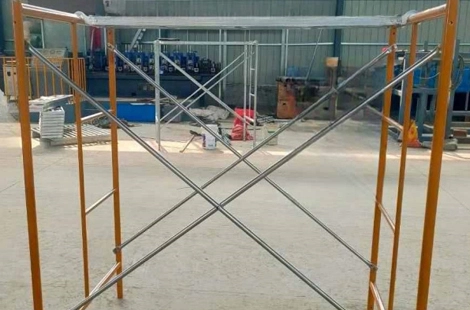
Taishenglan supplies a range of engineered steel support products including steel props, frame scaffolding, ringlock scaffolding, and steel frame formwork. For contractors, this means formwork and scaffolding can be sourced and coordinated through one supplier, simplifying logistics and compatibility.
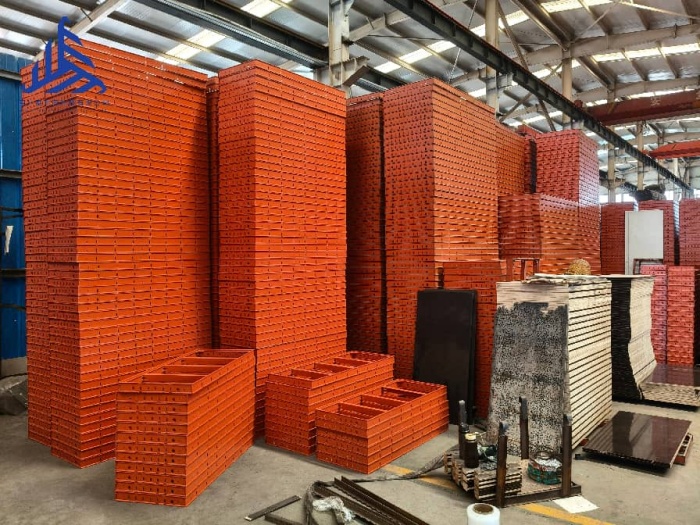
The company manufactures its formwork systems in-house and offers factory-direct supply to international projects. Taishenglan also provides project references and application guidance for concrete shoring, wall forming, and large-scale construction, which can help buyers assess system suitability before purchase.
For buyers managing complex projects, Taishenglan's ability to provide customized configurations, loading documentation, and technical communication during the planning stage can reduce formwork design risk.
Conclusion / Call to Action
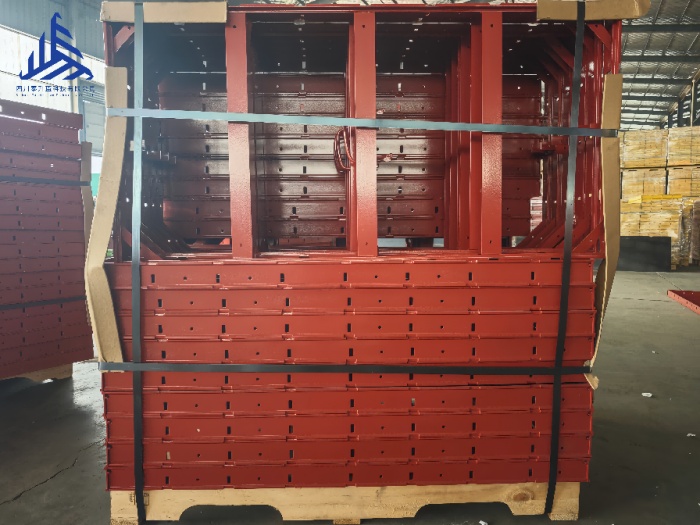
Steel frame formwork is a practical choice for contractors who need a reusable, high-capacity forming system for walls, columns, and foundations. Taishenglan's modular steel frame formwork combines rigid steel frames with plywood or composite facing panels, supported by wedge pins, clamps, and tie-rods.
If you are planning a concrete construction project and need formwork that can be reused across multiple pour cycles, contact Taishenglan to discuss panel sizes, load requirements, and project-specific configurations.
 English
 Español
 português
 العربية