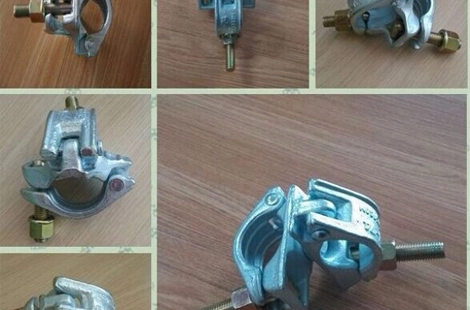
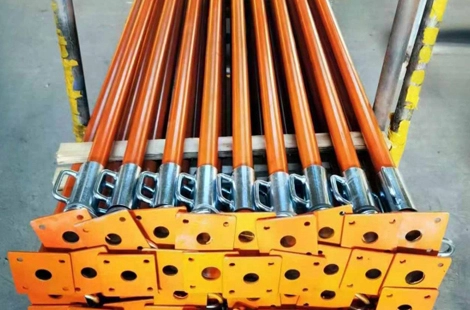
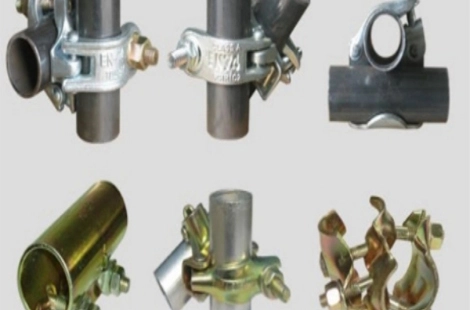
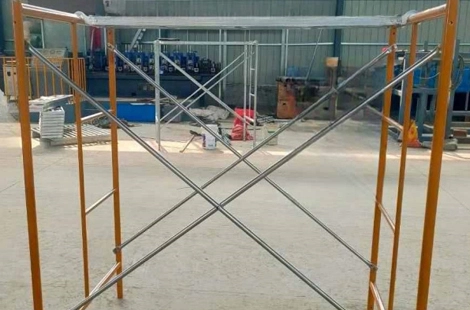
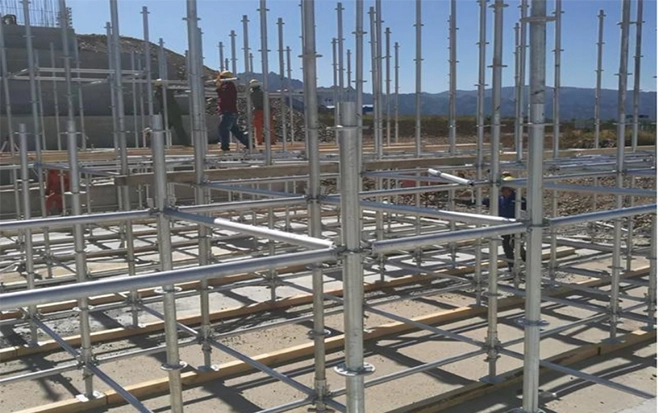
A scaffolding coupler should not be returned to service simply because it still appears usable after dismantling. Before reuse, it needs to be checked for damage that could affect how it grips the scaffold tube, transfers load, or remains tightened during use. Cracks, deformation, damaged threads, serious corrosion, and unreliable clamping are all signs that require attention.
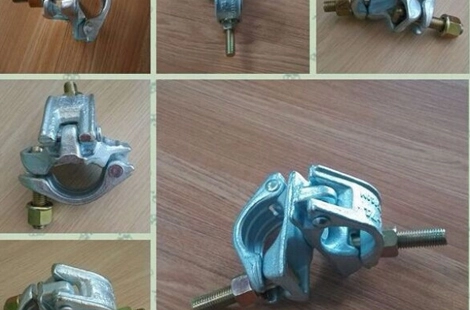
The inspection should also reflect the function of the component. Different types of coupler in scaffolding perform different connection roles. A right-angle coupler must maintain a rigid tube connection, while a swivel coupler must retain both clamping ability and the integrity of its rotating joint. For this reason, reuse decisions should consider the complete component rather than checking only whether the bolt still turns.
Key Areas to Check During a Scaffolding Coupler Inspection
The inspection should begin with the overall condition of the coupler. Dirt, dried concrete, paint buildup, and surface contamination can hide defects, so the component should be clean enough for the body and fastening areas to be examined clearly.
The body should retain its intended shape without obvious spreading, twisting, or bending. The surfaces that contact the scaffold tube should also remain reasonably even. If the body has been distorted, tightening the coupler may no longer produce uniform contact around the tube.
The fastening system should then be checked. Bolts and nuts need to engage correctly, and swivel designs should move through their intended range without abnormal looseness or binding. These differences matter because the various types of coupler in scaffolding do not all fail in the same way.
| Observed Condition | Why It Matters | Typical Decision |
|---|
| No visible cracks or deformation | The basic geometry appears intact | Continue with thread and clamping checks |
| Damaged threads | The coupler may not tighten reliably | Do not return directly to service |
| Crack in the body | Load transfer may be compromised | Remove from service |
| Permanent deformation | The coupler may not seat correctly | Remove from service |
| Light surface rust | May be cosmetic if no material loss exists | Clean and inspect further |
| Heavy corrosion or slipping | Material strength or clamping may be unreliable | Remove from service |
Assessing Bolts, Nuts, and Threads Before Reuse
Bolts and nuts are small compared with the coupler body, but they are responsible for creating and maintaining clamping force. A sound body cannot compensate for a fastening system that no longer works properly.
The nut should travel along the usable thread without excessive resistance, rocking, or irregular engagement. Flattened, stripped, badly corroded, or damaged threads can prevent the fastener from producing a dependable connection. A nut that appears to tighten but has poor engagement should not be accepted simply because resistance can still be felt.
The bolt should also remain straight and correctly seated. A bent bolt can cause one side of the scaffolding coupler to close differently from the other, creating uneven pressure around the tube.
Tightening requirements should follow the coupler design, manufacturer information, and the relevant site procedure. One generic tightening value should not automatically be applied to different brands or coupler designs.
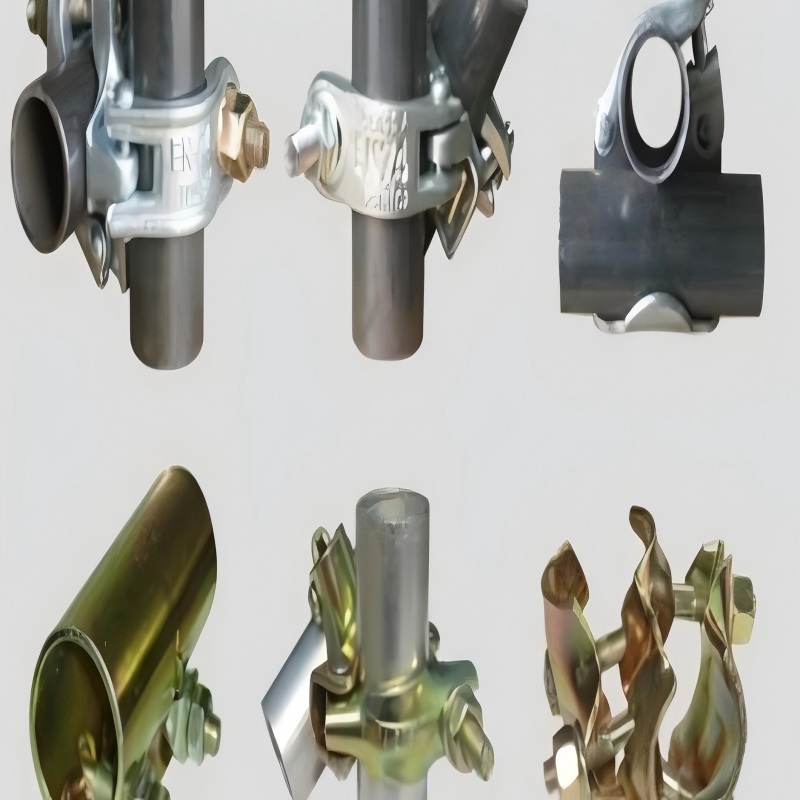
Why Cracks and Deformation Can Compromise Coupler Safety
Cracks are among the clearest reasons to reject a used coupler. They may develop around highly stressed areas of the body or near fastening points after repeated loading, impact, or misuse. Even a small visible crack indicates that the material is no longer continuous.
Permanent deformation creates a similar concern. A coupler that has been overloaded, struck, over-tightened, or forced during dismantling may no longer return to its original geometry. Tightening the nut cannot reliably correct a distorted body.
This matters because a scaffolding coupler depends on controlled contact with the scaffold tube. When the shape changes, pressure may become concentrated on a smaller area. With swivel couplers, abnormal looseness or distortion at the rotating joint can also affect alignment and connection stability.
How Corrosion and Surface Wear Affect Coupler Reliability
Not every sign of rust means that a coupler must be discarded. Scaffolding components are often exposed to moisture, weather, and repeated handling, so light surface oxidation can develop during normal use.
The important question is whether corrosion has caused material loss. Surface rust that can be cleaned away without revealing deep pitting is very different from corrosion that has reduced the metal section, damaged threads, or changed a critical contact surface.
Concrete residue and heavy paint can also interfere with inspection. Buildup inside the clamping area may prevent proper seating, while paint applied over corrosion can hide deterioration without restoring lost material.
If one used scaffolding coupler shows noticeably more wear, pitting, or distortion than comparable components, it should receive closer assessment before reuse.
Checking Clamping Performance Before Returning Couplers to Service
Visual inspection can reveal many problems, but a coupler ultimately needs to perform as a connection. When installed on the correct scaffold tube, it should seat naturally and tighten without unusual force or visible twisting.
A coupler that reaches the end of its tightening travel but still feels loose should not be considered serviceable. Slipping after tightening can indicate worn contact surfaces, body deformation, poor thread engagement, or incompatibility with the intended tube.
The expected behavior also depends on the design. A right-angle coupler should hold the required tube relationship, while a swivel coupler needs to secure both tubes without abnormal movement at the joint. This is why different types of coupler in scaffolding should be inspected according to their actual function.
TSL Scaffolding supplies common coupler configurations together with other scaffold connection components. Contractors replacing worn stock can review TSL's scaffolding couplers and related scaffold products according to the connection required on the project.
When Scaffolding Couplers Should Be Removed from Service
A coupler should be removed from service when its condition creates doubt about whether it can still perform as designed. A cracked body is a clear rejection condition, and permanent deformation that prevents correct seating should lead to the same conclusion.
Fasteners with badly damaged threads, bent bolts, and couplers that cannot maintain dependable clamping action should also be separated from usable stock. Heavy corrosion with obvious pitting or material loss is another strong reason for rejection.
Rejected components should be kept separate from serviceable material. On a busy construction site, a defective scaffolding coupler left in the same storage area can easily return to circulation during the next erection.
Where the condition of a coupler cannot be confirmed with confidence, replacement is generally more appropriate than relying on assumption. Contractors maintaining larger stocks of different types of coupler in scaffolding can contact TSL Scaffolding about suitable replacement couplers based on the required connection and scaffold system.
Conclusion
Inspecting scaffolding couplers before reuse involves more than checking for visible rust or confirming that the nut still turns. A reliable inspection considers whether the complete component can still grip, tighten, align, and transfer load as intended.
Cracks and permanent deformation are strong reasons for rejection, while damaged threads and bent bolts can prevent reliable tightening. Corrosion should be judged by its effect on the underlying metal, and clamping performance should be checked because a coupler may look acceptable while still failing to hold the tube securely.
The inspection method should also reflect the differences between the various types of coupler in scaffolding. For TSL Scaffolding, the practical goal is to keep serviceable couplers in controlled use while identifying questionable components before they return to an erected scaffold.
Frequently Asked Questions
1. Can scaffolding couplers be reused?
Yes, provided they remain in suitable condition and pass the required inspection before reuse.
2. What should be checked first on a used scaffolding coupler?
Start with the overall body condition and look for cracking, deformation, abnormal wear, or serious corrosion.
3. Can a coupler with damaged threads still be used?
If the threads no longer engage and tighten correctly, the coupler should not be treated as serviceable.
4. Does surface rust mean a coupler must be discarded?
Not always. Light surface oxidation may be acceptable, but deep pitting or material loss requires closer assessment.
5. Do different types of coupler in scaffolding require different inspections?
Yes. The basic checks are similar, but swivel joints, fixed connections, and specialized couplers have different functional areas.
6. When should a scaffolding coupler be removed from service?
It should be removed when cracking, serious deformation, significant corrosion, damaged fasteners, or unreliable clamping raises doubt about safe performance.
 English
 Español
 português
 العربية