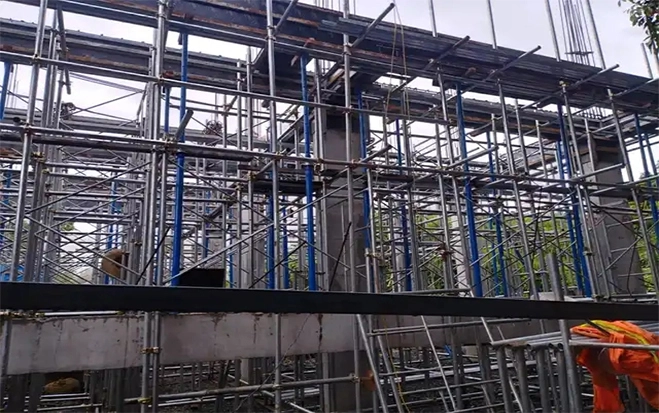
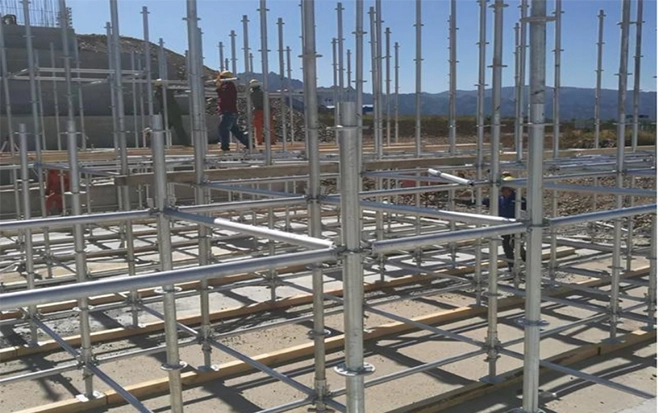
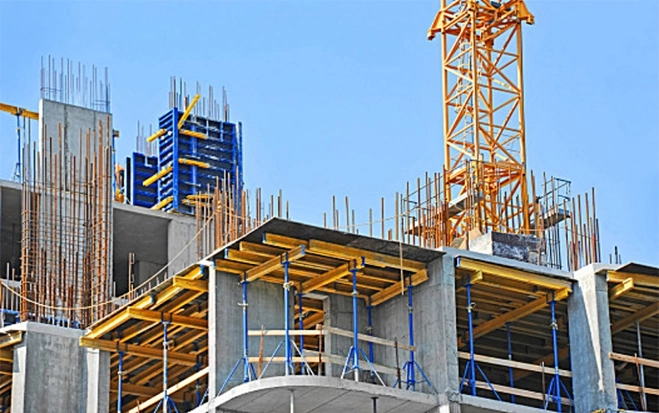
Scaffolding inside a tunnel has to solve a difficult spatial problem. Workers need a stable platform close enough to the tunnel wall or crown to perform construction, lining, inspection, or maintenance work, yet the scaffold itself cannot occupy so much of the tunnel section that it blocks movement, equipment, ventilation, or material handling.
This makes tunnel scaffolding different from a conventional scaffold erected beside an open building facade. The available width and height are defined by the tunnel profile, while the ground may slope, curve, or change elevation over a short distance. The layout therefore has to respond to the space rather than forcing a standard scaffold arrangement into it.
Good design is ultimately a balance. Reducing the scaffold footprint can improve access through a narrow tunnel, but removing standards or braces simply to create more room can weaken the structure. Increasing platform area may make work easier, yet it also changes the load carried by the supporting scaffold. The safest arrangement is the one that gives workers the access they need while preserving a clear and continuous load path to the ground.
How Confined Tunnel Geometry Shapes Scaffolding Layout
Tunnel geometry determines where a scaffold can stand long before individual components are selected. A circular or horseshoe-shaped tunnel provides a very different working envelope from a rectangular service tunnel. Near the lower walls there may be reasonable width, while clearance becomes progressively tighter as the scaffold rises toward the crown.
As a result, tunnel scaffolding often needs to change width or working level as it follows the tunnel profile. A platform intended for sidewall work may not be suitable when the same crew moves toward the upper lining. Standards, ledgers, braces, and access points need to be positioned so that the scaffold reaches the work face without creating unnecessary obstruction below.
Longitudinal conditions matter as well. Tunnel dimensions can change around cross passages, niches, drainage channels, service installations, or transitions between excavated sections. A scaffold that fits one area comfortably may become difficult to erect only a short distance farther along the tunnel.
This is one reason modular systems can be useful in underground work. The scaffold can be configured around the actual section instead of relying on a single fixed frame size throughout the project.
Creating Safe Access Without Sacrificing Valuable Working Space
Access becomes more complicated when every part of the tunnel cross-section is valuable. Workers still need a practical route to the platform, but a badly positioned ladder or stair access can interfere with the passage used for tools, materials, or other site activities.
The solution is not simply to make access as narrow as possible. Access has to remain usable throughout the work cycle, including when workers are carrying tools or leaving the platform. Cross braces should not become improvised climbing routes simply because they occupy less space. The access arrangement should be considered at the same time as the main scaffold rather than added after erection.
The same principle appears in scaffolding for bridges, where access frequently has to coexist with traffic, structural members, or limited working zones. The difference is that bridge scaffolding often has more open space around the structure, whereas a tunnel fixes the available envelope on almost every side. Inside a tunnel, moving one scaffold component to solve an access problem can immediately affect another part of the working area.
For that reason, efficient tunnel access comes from careful positioning rather than simply reducing dimensions. An access point placed outside the main working path may preserve more usable platform space without compromising the structural arrangement.
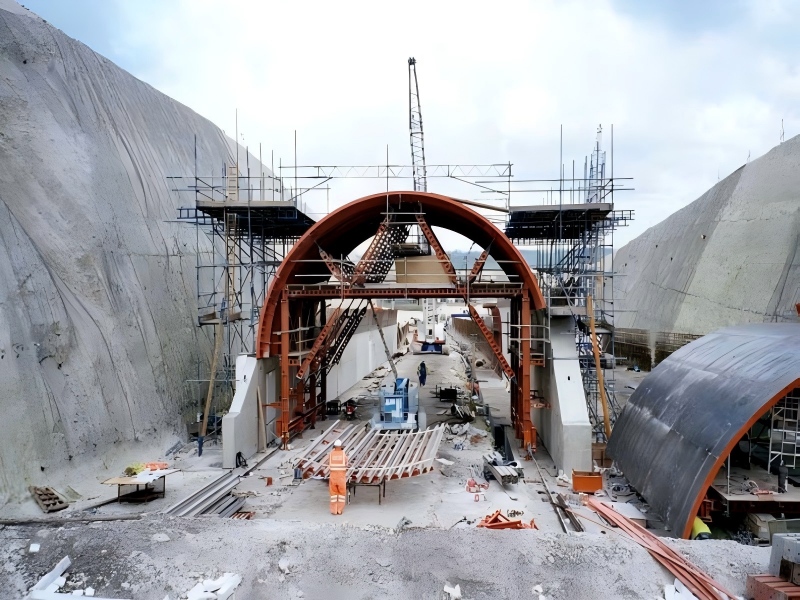
Planning Platform Width and Load Distribution in Tight Tunnel Sections
Platform width should be based on the work being performed, not on how much space happens to remain between scaffold standards. Workers need enough room to stand, move, and handle the equipment required for the task, while the platform and its supports must remain compatible with the scaffold design.
In a tight section, there can be pressure to extend a platform outward to reach the curved tunnel wall while keeping the standards farther toward the center. That may improve reach, but it also changes how the load acts on the supporting scaffold. Cantilevered or offset working areas therefore require particular attention to the way forces are transferred back into the main structure.
Loading also changes as work progresses. A platform used mainly for inspection does not impose the same demand as one supporting workers, tools, and construction materials. Concentrating material on one portion of the platform can create a local condition that is more demanding than the overall scaffold appears to be.
| Design Condition | Tunnel Scaffolding | Scaffolding for Bridges |
|---|
| Available space | Restricted by tunnel walls and crown | Often more open, but restricted by bridge geometry and traffic |
| Platform positioning | Must follow curved or changing tunnel profiles | Often follows decks, piers, girders, or abutments |
| Access planning | Must preserve limited internal passage | May need to avoid traffic lanes or structural obstructions |
| Base conditions | Can involve slopes, drainage channels, or uneven tunnel floors | Can involve ground, pier bases, decks, or suspended arrangements |
| Main layout challenge | Balancing usable space with structural continuity | Reaching exposed structural areas while maintaining support |
How Bracing and Support Positioning Maintain Structural Stability
In confined spaces, braces are sometimes viewed as obstacles because they cross areas that might otherwise be used for movement. Structurally, however, they are part of the system that prevents the scaffold from behaving like a collection of independent vertical members.
Bracing helps maintain the intended geometry as loads move through the scaffold. Removing or relocating it only to create a wider passage can change the way the structure responds to movement or horizontal forces. Any adjustment needs to preserve the stability assumed in the scaffold design.
Support positioning is equally important. Standards should transfer their loads into suitable foundations rather than being placed wherever there happens to be a gap between tunnel services. When the floor contains drainage channels, raised edges, slopes, or local depressions, the base arrangement has to accommodate those conditions without relying on unstable packing.
This relationship between vertical support and bracing is also familiar in scaffolding for bridges. In both environments, a scaffold may be tall, irregular, or built around structural obstacles. The important difference is that tunnel work gives designers less freedom to move the scaffold outward when a brace or standard conflicts with the working area.
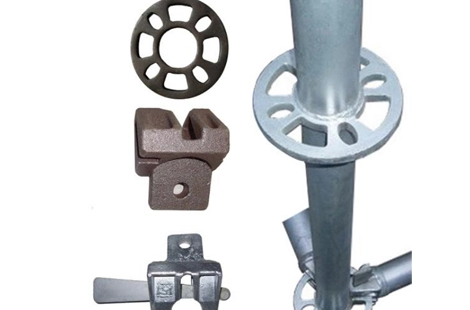
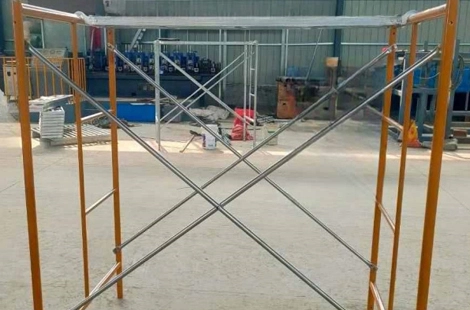
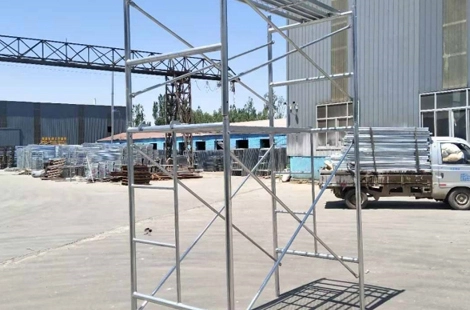
Taishenglan Scaffolding supplies ringlock scaffolding, scaffold frames, adjustable bases, steel planks, and related components that can be combined for different support conditions. Contractors considering how to configure a restricted work area can review Taishenglan's scaffolding systems and supporting components in relation to the actual tunnel geometry rather than selecting isolated parts independently.
Adapting Tunnel Scaffolding to Limited Clearance and Uneven Ground
Limited headroom often changes the upper portion of a tunnel scaffold more than the lower structure. The scaffold may have adequate width near floor level but very little clearance around the crown. Trying to maintain the same bay arrangement all the way upward can leave workers either too far from the surface or squeezed into an impractical working position.
A more effective layout follows the tunnel section while maintaining a stable structural path beneath the platform. The objective is not to fill every available space with scaffold, but to place support where it contributes to the working level and the stability of the overall structure.
Ground conditions create another constraint. Tunnel floors may slope for drainage, contain channels, or remain uneven during construction. Adjustable jack bases can help establish a level scaffold from varying elevations, but adjustment does not replace the need for a firm supporting surface. The load from each standard still has to reach a base capable of carrying it without unwanted settlement or displacement.
These conditions explain why tunnel scaffolding is usually more successful when planned from site measurements and working requirements rather than copied from an arrangement used on an open construction site. Even projects using similar scaffold components may require substantially different layouts because their tunnel profiles and base conditions are different.
What to Inspect Before Tunnel Scaffolding Enters Service
Before the scaffold is used, the inspection should confirm that what was erected still matches the intended layout. This is particularly important in tunnels because components may be moved during erection to avoid pipes, cables, equipment, or irregular ground. A small field adjustment can affect the position of a brace, the support beneath a platform, or the alignment of several standards.
The base should remain firm and correctly seated, while standards should be aligned and connected as intended. Platforms need secure support and should not contain unnecessary gaps or improvised extensions. Access should lead workers to the intended working level without requiring them to climb structural bracing or pass through awkward obstructions.
The inspection should also consider how the tunnel will function once work begins. A scaffold may be structurally complete but still create problems if an access route becomes blocked when materials arrive or if the working platform interferes with another planned operation. In a confined environment, usability and stability have to be considered together.
Where a project involves changing tunnel sections, unusual clearances, or a combination of tunnel scaffolding and scaffolding for bridges, early discussion with the supplier can help match component configuration to the actual application. Contractors can contact Taishenglan Scaffolding with project drawings or site requirements when planning a scaffold system for a restricted infrastructure project.
Conclusion
Effective tunnel scaffolding is not created by simply fitting the largest possible working platform into the available space. The scaffold has to give workers useful access while retaining the support, bracing, and load distribution needed for structural stability.
Tunnel shape influences almost every design decision. Curved walls can change platform positioning, limited clearance can restrict upper scaffold dimensions, and uneven floors can complicate the base arrangement. At the same time, access routes and working space must remain practical throughout the job rather than only at the moment of erection.
The engineering principles overlap with those used in scaffolding for bridges, particularly where irregular geometry and restricted access are involved. Tunnel projects, however, leave less room for structural components to be repositioned. For Taishenglan Scaffolding, this makes project-specific configuration especially important: the scaffold should follow the tunnel and the work sequence, while the structural system remains continuous from the working platform down to its foundation.
Frequently Asked Questions
1. What makes tunnel scaffolding different from normal building scaffolding?
Tunnel scaffolding must work within restricted width and height while adapting to curved profiles, uneven floors, and limited access routes.
2. Which scaffolding system can be used in tunnel construction?
The appropriate system depends on tunnel geometry, working height, load requirements, and access needs. Modular systems such as ringlock scaffolding can be useful where the layout needs to adapt to changing conditions.
3. How does tunnel shape affect scaffold platform positioning?
Curved walls and crowns can reduce clearance at higher levels, so platform position and scaffold width may need to change as the working level rises.
4. Can adjustable jack bases be used on uneven tunnel floors?
They can help level the scaffold where elevations vary, but they must still rest on a firm base capable of supporting the applied load.
5. Why is bracing important in confined tunnel scaffolding?
Bracing helps maintain scaffold geometry and structural stability. It should not be removed simply to create additional working or access space.
6. Is tunnel scaffolding similar to scaffolding for bridges?
Both may require layouts around irregular structures and restricted access. Tunnel scaffolding is generally more constrained because the surrounding tunnel limits where standards, braces, platforms, and access routes can be positioned.
 English
 Español
 português
 العربية