Introduction
Construction sites exposed to rain, humidity, or coastal air place extra demands on scaffolding systems. Uncoated steel components corrode over time, reducing load capacity and shortening service life. For contractors and rental companies operating in these conditions, the choice of surface treatment is not a minor detail—it directly affects maintenance costs, replacement cycles, and site safety.
Galvanized ringlock scaffold systems address this by combining the modularity and load capacity of ringlock scaffolding with protective surface finishes designed for outdoor use. This article explains what buyers should know about galvanized ringlock scaffold specifications, surface treatment options, and how to match the right finish to project conditions.
What Is Galvanized Ringlock Scaffold
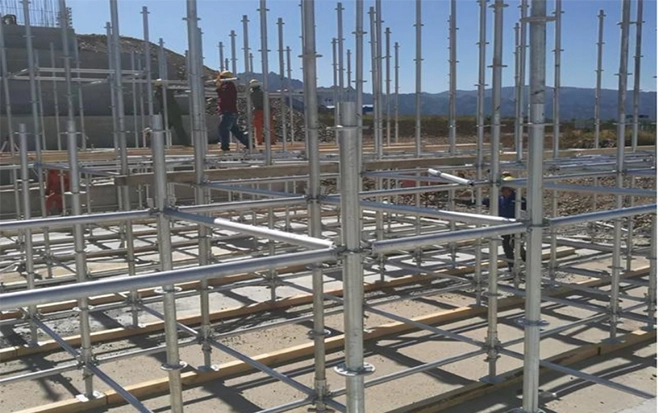
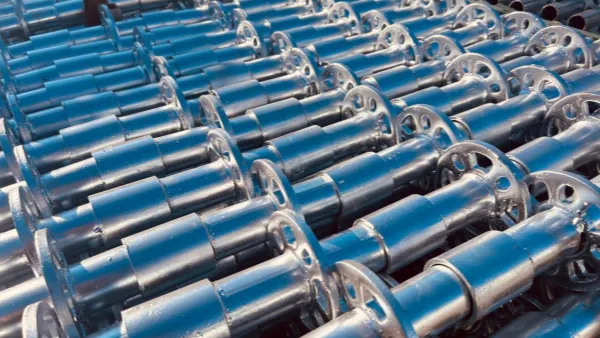
Ringlock scaffolding is a modular system built from vertical standards, horizontal ledgers, diagonal braces, and rosette connectors. The galvanized variant refers to ringlock components that receive a protective zinc coating—either through pre-galvanizing or hot-dip galvanizing (HDG)—instead of or in addition to painted surfaces.
Taishenglan Scaffolding offers ringlock components in three surface treatment options: painted, galvanized, and hot-dip galvanized (HDG). The galvanized and HDG options are typically specified when the scaffolding will face repeated exposure to moisture, chemicals, or extended outdoor storage between projects.
The core structural specifications remain consistent across finish options. Vertical standards with spigot connections use Q345 steel with a 48.3mm outer diameter and wall thickness ranging from 2.75mm to 3.5mm. Available standard lengths span from 500mm to 3000mm. Horizontal ledgers use Q235 steel in 48mm diameter with matching wall thickness, available in lengths from 600mm up to 2572mm. Vertical diagonal braces also use Q235 steel in 48.3mm diameter with 2.4mm to 2.5mm wall thickness.
Key Features and Advantages
Corrosion Resistance for Extended Outdoor Use
The primary reason buyers specify galvanized ringlock scaffold is corrosion protection. Pre-galvanized components carry a zinc layer applied before fabrication, while HDG components are dipped in molten zinc after welding and assembly. HDG generally provides thicker coating coverage and longer protection in harsh environments. Both options reduce rust formation compared to painted-only surfaces, particularly at weld joints and connection points where moisture tends to collect.
Structural Consistency Across Finish Options
Whether painted, galvanized, or HDG, the ringlock system maintains the same rosette connection geometry and wedge-lock mechanism. This means a contractor can mix components with different surface treatments within the same structure without compatibility issues, provided load calculations account for the specific material grades of each component.
High Load Capacity with Multi-Storey Configuration
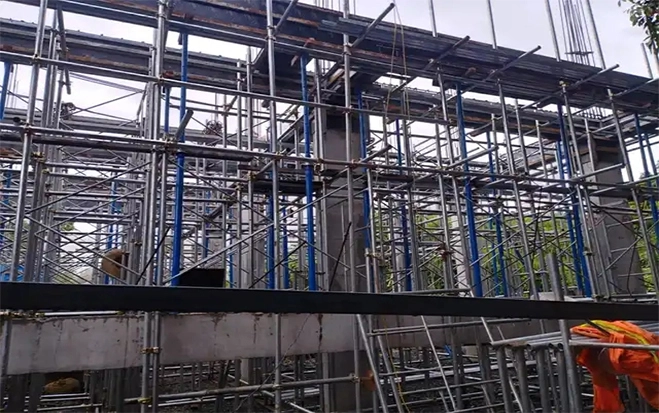
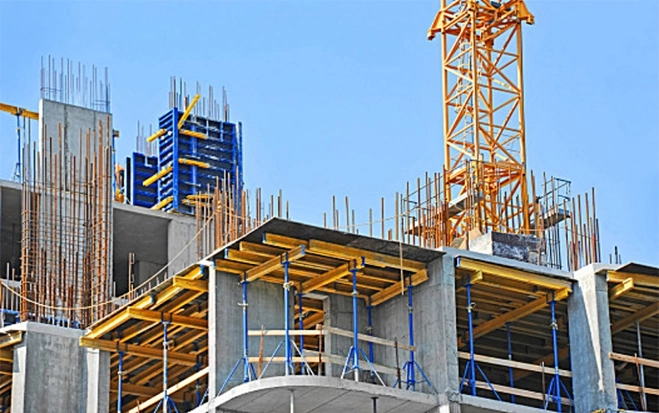
The Q345 steel used in vertical standards provides the strength needed for multi-level scaffolding structures. Combined with the ring-and-wedge connection system, the scaffold can support heavy loads across multiple working levels—an important consideration for concrete formwork support, masonry work, and facade installations on mid-rise and high-rise buildings.
Efficient Assembly and Disassembly
The rosette connector system allows workers to attach ledgers and braces at multiple angles using a single wedge pin. This reduces the number of loose fittings on site and speeds up both assembly and dismantling. For rental companies that move equipment between projects frequently, this translates to lower labor costs per turnaround.
Flexible System Configuration
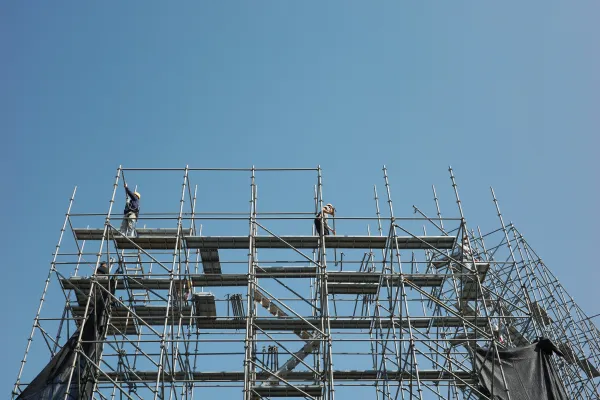
With standard lengths from 500mm to 3000mm and ledger lengths from 600mm to 2572mm, the system adapts to various building geometries. The wide range of diagonal brace lengths also allows engineers to configure the bracing pattern needed for specific load and stability requirements.
Main Applications
Galvanized ringlock scaffold is suitable for projects where moisture exposure is expected or where the scaffolding will remain in place for extended periods. Typical applications include:
· Bridge and infrastructure construction, where scaffolding may stand over water or in open environments for months
· Coastal and marine construction projects, where salt air accelerates corrosion on unprotected steel
· Industrial facility maintenance, where chemical exposure or steam may affect scaffold surfaces
· Outdoor commercial and residential building projects in regions with frequent rainfall or high humidity
· Rental fleet inventory, where equipment is stored outdoors between rentals and must resist weathering during idle periods
In each case, the galvanized finish extends the interval between maintenance cycles and reduces the frequency of component replacement due to corrosion.
How to Choose the Right Surface Treatment and Specifications
Buyers evaluating galvanized ringlock scaffold should consider the following factors before placing an order:
1. Project Environment and Exposure Duration
For short-term indoor projects or dry climates, painted surfaces may be adequate and more economical. For outdoor projects lasting several months, pre-galvanized components offer a reasonable balance of protection and cost. For long-term exposure, coastal environments, or chemical exposure, HDG is the more conservative choice.
2. Material Grade by Component Type
Taishenglan Scaffolding uses Q345 steel for vertical standards and Q235 steel for ledgers and diagonal braces. Buyers should confirm that the material grades match their project engineering requirements. Q345 offers higher yield strength, which matters for standards that carry vertical compressive loads. Q235 is adequate for ledgers and braces that primarily handle bending and tension.
3. Wall Thickness Selection
Standard wall thickness ranges from 2.75mm to 3.5mm, while ledgers and braces range from 2.4mm to 3.5mm. Thicker walls increase load capacity and durability but also add weight and cost. Buyers should match wall thickness to the expected loads and handling constraints of their project.
4. Component Length Matching
Ringlock systems perform best when standard and ledger lengths are selected to match the building grid. Buyers should prepare a layout plan showing bay dimensions before ordering, then select ledger lengths that minimize cutting or custom fabrication on site.
5. Surface Treatment Compatibility with Existing Fleet
Rental companies adding galvanized ringlock components to an existing inventory should consider whether mixing painted and galvanized components creates visual inconsistency for clients. From a structural standpoint, the components are compatible. From a fleet management standpoint, uniform finish across the inventory simplifies maintenance tracking.
6. Packaging and Shipping Considerations
Galvanized and HDG surfaces are more resistant to handling damage during transport, but heavy stacking can still scratch or chip the zinc coating at contact points. Buyers should confirm packaging methods—particularly for long components like standards and braces—to minimize coating damage in transit.
Why Work with This Supplier
Taishenglan Scaffolding manufactures ringlock components across a range of surface treatments, material grades, and dimensions. Buyers working with this supplier can expect the following:
· Product series coverage: The ringlock line includes standards, ledgers, diagonal braces, base collars, and compatible accessories, allowing buyers to source a complete system from one supplier.
· Surface treatment flexibility: Painted, galvanized, and HDG options are available, so buyers can match the finish to project requirements rather than accepting a one-size-fits-all specification.
· Customization support: Non-standard lengths, specific wall thicknesses, and packaging configurations can be discussed for project-specific orders.
· Technical communication: The supplier provides specification sheets and component compatibility information to support engineering review and procurement planning.
· Stable product supply: With multiple production lines and established export logistics, the supplier can support recurring orders for rental companies and contractors with ongoing project pipelines.
Conclusion
Galvanized ringlock scaffold offers a practical solution for construction projects where moisture, humidity, or extended outdoor exposure is a concern. By selecting the appropriate surface treatment—painted, pre-galvanized, or hot-dip galvanized—buyers can align their scaffolding investment with the actual conditions their equipment will face.
If you are planning a project in a challenging environment or evaluating options for your rental fleet, contact Taishenglan Scaffolding to discuss galvanized ringlock specifications, surface treatment recommendations, and component matching for your requirements.
 English
 Español
 português
 العربية