Introduction
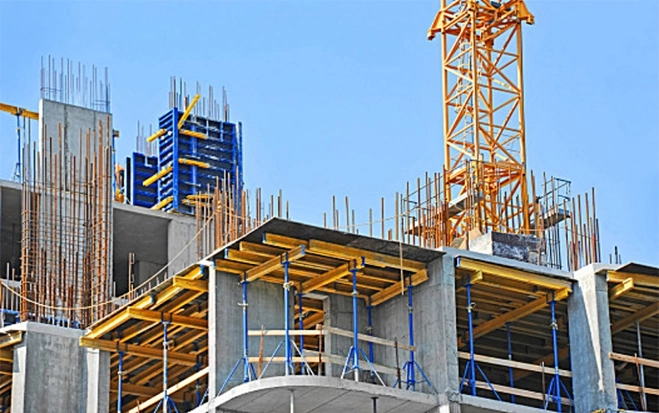
Concrete formwork systems hold liquid concrete in place until it gains structural strength. The pressure exerted by fresh concrete on formwork panels is substantial — a tall wall pour can generate significant lateral force that pushes the panels apart. Without a reliable tie rod system connecting opposing formwork faces, the formwork can deflect, bulge, or fail entirely during pouring.
Tie rod and wing nut assemblies are the tension components that resist this lateral pressure. They thread through the formwork panels, lock into place with wing nuts on either side, and maintain the correct panel spacing until the concrete cures. For procurement teams sourcing formwork accessories for wall, column, or foundation concrete work, understanding tie rod specifications — diameter, steel grade, breaking load, and accessory components compatibility — is essential for both safety and cost control.
This guide covers the tie rod and wing nut product range available from Taishenglan Scaffolding (www.tsl-scaffolding.com), including specifications for 15mm and 17mm systems, accessory components options, and key procurement considerations.
What Is a Formwork Tie Rod System?
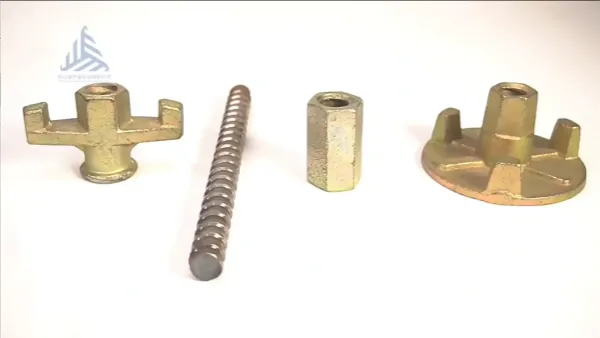
A formwork tie rod system consists of several interconnected components:
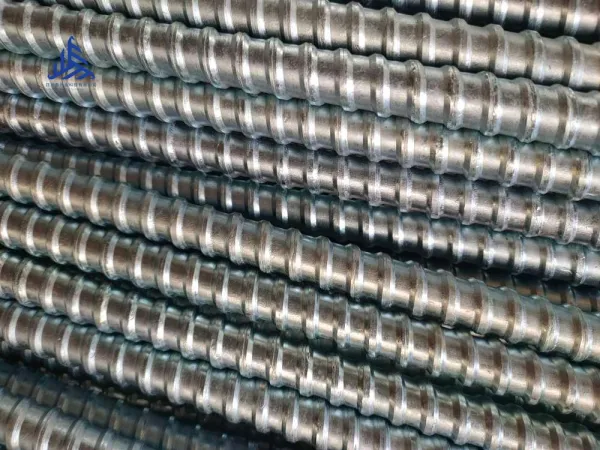
· Tie rod: A threaded steel rod that spans the width of the formwork, passing through both panel faces. It resists the lateral pressure of wet concrete through tension.
· Wing nut: A hand-tightened nut with two "wings" or handles that secures the tie rod against the formwork panel. The wing design allows workers to tighten or loosen without specialized tools.
· Washer plate: A steel plate placed between the wing nut and the formwork panel, distributing the clamping force over a wider area to prevent local damage to the panel.
· Water stop: A component installed at the midpoint of the tie rod in waterproof concrete structures, preventing water from seeping along the rod path.
· Steel cone: A conical spacer that sets the wall thickness and creates a recess in the concrete surface for later rod removal or grouting.
Together, these components form a complete tie rod assembly that maintains formwork geometry during concrete placement.
Key Features and Specifications
Taishenglan Scaffolding offers tie rod systems in two primary diameters — 15mm and 17mm — with a full range of accessory components.
Hot Rolled Tie Rods
· Diameters: 15mm / 17mm
· Length: Various lengths available
· Breaking load: 180 KN
Cold Rolled Tie Rods
· Diameters: 12mm / 17mm / 20mm
· Material: Q235 steel or 45# steel
· Length options: 1M / 2M / 3M / 5.8M / 6M
· Breaking load: 90 KN (12mm) / 180 KN (17mm, 20mm)
The choice between hot rolled and cold rolled tie rods affects both cost and performance. Hot rolled rods are produced from heated steel billets, offering good ductility. Cold rolled rods are processed at room temperature, yielding higher dimensional accuracy and surface finish. The material grade — Q235 (a standard structural steel) or 45# (a medium-carbon steel with higher tensile strength) — determines the rod's load-bearing characteristics.
Wing Nuts
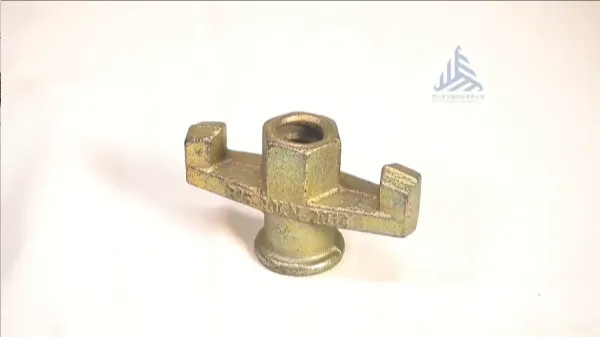
· Types: Anchor / One Arm / Two Arms
· Manufacturing process: Casted or Forged
· Breaking load: 180 KN
Wing nuts are available in three configurations. Two-arm wing nuts provide balanced clamping force and are the most common type for general formwork. One-arm designs are used in tight-access areas where a second arm would interfere with adjacent formwork. Anchor-type wing nuts are used for specialized formwork connections.
The casting versus forging distinction affects mechanical properties. Forged wing nuts are generally stronger due to the refined grain structure produced during the forging process, while casted wing nuts offer more complex geometric options at a lower production cost.
Swivel Wing Nuts
· Types: Anchor / One Arm / Two Arms
· Manufacturing process: Casted or Forged
· Breaking load: 180 KN
Swivel wing nuts allow the nut to pivot relative to the tie rod axis. This accommodates angled formwork configurations where the tie rod is not perpendicular to the panel surface.
Additional Components
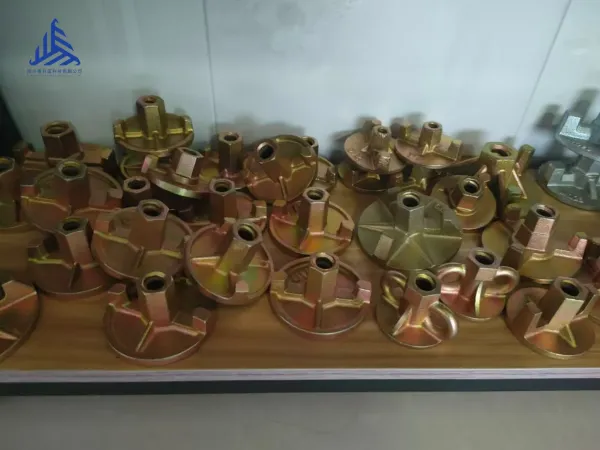
The tie rod system includes several accessory components, all rated to 180 KN breaking load:
· Washer plates: Available in rib type or flat type
· Water stops: 17mm / 20mm diameter, casted, weighing 440g / 500g / 900g
· Hex nuts: 17mm / 20mm diameter, 30mm / 50mm / 100mm / 105mm length
· Steel cones: 17mm / 20mm diameter, 75mm / 100mm length
All accessory components share the same 180 KN breaking load rating, ensuring system consistency — the weakest link in the tie rod assembly is matched to the rod's rated capacity.
Main Applications
Formwork tie rod systems are used in concrete construction wherever opposing formwork faces must be held together against lateral concrete pressure:
· Wall construction: Tie rods span across wall formwork panels, maintaining wall thickness during concrete pouring for basement walls, retaining walls, and structural walls
· Column formwork: Vertical concrete columns where formwork panels are tied together at intervals to resist concrete pressure
· Foundation concrete: Footings and pile caps where formwork must withstand the pressure of mass concrete pours
· Water-retaining structures: Water tanks, treatment plants, and below-grade structures where water stops are installed on the tie rod to prevent seepage
· Bridge substructure: Pier caps and abutments where high-volume concrete placement generates significant formwork pressure
The 15mm system is typically selected for lighter formwork applications — residential walls, low-height retaining walls, and non-structural concrete elements. The 17mm system is preferred for heavier applications — tall wall pours, mass concrete, and structures requiring higher tie rod tension capacity.
How to Choose the Right Tie Rod System
Selecting tie rods and wing nuts for a formwork project requires evaluating several factors:
1. Diameter and Breaking Load
The 15mm and 17mm systems both carry a 180 KN breaking load rating in hot rolled configuration. However, the 17mm system provides a larger cross-section, which may offer better performance under cyclic loading or in situations where the rod will be reused across multiple pours. For one-time or light-duty applications, the 15mm system may provide adequate capacity at a lower material cost.
2. Material Grade: Q235 vs. 45# Steel
Q235 is a standard structural steel grade commonly used in construction. It provides reliable performance for general formwork applications. 45# steel is a medium-carbon steel with higher tensile strength, suitable for applications requiring greater load margin or where the tie rod will be subjected to repeated tightening and loosening cycles.
3. Rod Length and Joint Strategy
Tie rods are available in standard lengths of 1M, 2M, 3M, 5.8M, and 6M. For wall thicknesses that exceed a single rod length, rods can be joined using coupling nuts. The 5.8M length is designed to fit within a standard 6M shipping container, reducing shipping costs for export orders. Consider the wall thickness, formwork panel thickness, and required extension beyond the panels when calculating total rod length needed.
4. Wing Nut Type and Access Conditions
Two-arm wing nuts are the default choice for general formwork — they provide balanced force and easy hand-tightening. One-arm wing nuts are selected when formwork geometry restricts access on one side. Swivel wing nuts are necessary when the tie rod enters the formwork at an angle rather than perpendicular to the panel.
5. Water Stop Requirements
For structures that must resist water passage — basement walls below the water table, water tanks, treatment plant structures — a water stop component is installed at the midpoint of the tie rod. This requires a continuous tie rod through the wall (rather than a breakaway type), and the water stop diameter must match the rod diameter (17mm or 20mm).
6. Reuse and Maintenance Planning
Tie rods and wing nuts are reusable across multiple pours if properly maintained. After each use, concrete residue should be cleaned from threads, and components should be inspected for thread damage, cracks, or deformation. Components showing signs of wear should be removed from service. For projects with high reuse cycles, forged wing nuts and 45# steel rods offer better durability than casted nuts and Q235 rods.
Why Work with Taishenglan Scaffolding
Taishenglan Scaffolding supplies a complete formwork tie rod system — rods, wing nuts, washer plates, water stops, hex nuts, and steel cones — all rated to consistent breaking load specifications.
Key supplier capabilities include:
· Complete system supply: All tie rod system components are available from a single source, ensuring load rating consistency across the assembly
· Multiple diameter options: 15mm and 17mm systems in both hot rolled and cold rolled configurations, plus 12mm and 20mm options for specialized requirements
· Material options: Q235 and 45# steel grades to match project load requirements and reuse expectations
· accessory components variety: Wing nuts (anchor, one-arm, two-arm), swivel wing nuts, washer plates (rib type, flat type), water stops, hex nuts, and steel cones
· Length flexibility: Standard lengths from 1M to 6M, with 5.8M option for container shipping efficiency
· Technical support: Taishenglan Scaffolding can assist with tie rod selection based on wall thickness, concrete pressure calculations, and formwork system type
· Volume production: Manufacturing capacity supports large-volume orders for major construction projects
Conclusion
Tie rod and wing nut systems are critical tension components in concrete formwork. The right combination of rod diameter, material grade, wing nut type, and accessory components ensures that formwork maintains its geometry under concrete pressure, producing structurally sound concrete elements with correct dimensions and surface quality.
When sourcing tie rod systems, consider not only the breaking load rating but also the full component compatibility, reuse strategy, and site access conditions. For projects requiring complete tie rod system supply with consistent specifications, contact Taishenglan Scaffolding to discuss diameter, length, material, and accessory components requirements for your formwork project.
 English
 Español
 português
 العربية