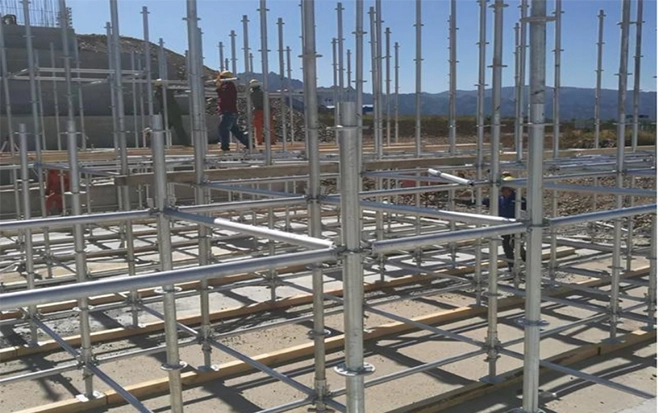
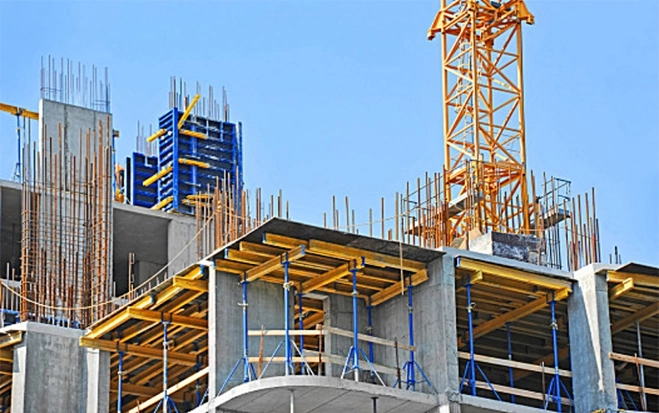
In large-scale industrial construction, civil infrastructure projects, and complex architectural engineering, the structural integrity of a temporary access system relies heavily on its connection points. While vertical standards and horizontal ledgers form the skeletal framework of a scaffold, it is the mechanical clamps that ensure structural stability under load stress. For project engineers and procurement managers, understanding the exact functional differences among essential structural components is paramount to maintaining a secure jobsite.
Selecting the right mechanical connector involves analyzing how forces travel through a scaffolding matrix. Different architectural layouts present distinct structural challenges, ranging from maintaining rigid perpendicular grids to absorbing heavy vertical downloads. Engineers must also account for specialized tasks, such as securing scaffolding components safely to wide-flanged structural steel beams or creating continuous, completely flat working platforms to optimize worker movement. This engineering application guide breaks down the precise roles of three foundational load-bearing clamps: the double scaffold coupler, the girder coupler, and the putlog coupler.
1. Double Scaffold Coupler: The Core Blueprint for Perpendicular Rigidity
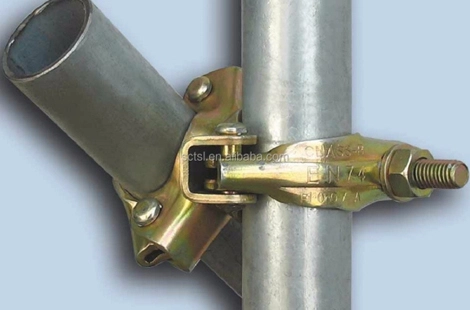
The double scaffold coupler serves as the primary mechanical link in standard tube-and-clamping scaffolding matrices. Engineered exclusively to connect two steel scaffold tubes at a fixed 90-degree angle, this component establishes the foundational grid that absorbs vertical loads from personnel, machinery, and stockpiled materials.
When structural forces act upon a scaffolding framework, they travel vertically down the standards and horizontally across the ledgers. The double scaffold coupler acts as a rigid anchor at these intersections.
Load Distribution: It prevents horizontal tubes from slipping or tilting under immense weight, maintaining the structural geometry.
Alignment Security: By restricting mechanical rotation or geometric displacement, it guarantees that the vertical alignment of the structural posts remains perfectly true.
Sway Prevention: In high-rise facade operations and heavy masonry setups, utilizing a premium double scaffold coupler ensures that wind shear forces do not compromise the safety of the perimeter framework.
Whether manufactured through heavy-duty drop-forging or precision steel pressing, this specific clamp configuration provides the critical resistance to slippage required to pass stringent jobsite inspections.
2. Girder Coupler: Anchoring Scaffolding Systems to Structural Steel
Modern industrial engineering projects—such as steel-framed commercial warehouses, subway tunnels, oil refineries, and large-scale bridge rehabilitations—frequently require scaffolding systems to integrate directly with existing structural steelwork. Traditional pipe clamps cannot attach securely to the wide, flat flanges of heavy structural beams. To solve this specific spatial and structural challenge, engineers deploy the girder coupler.
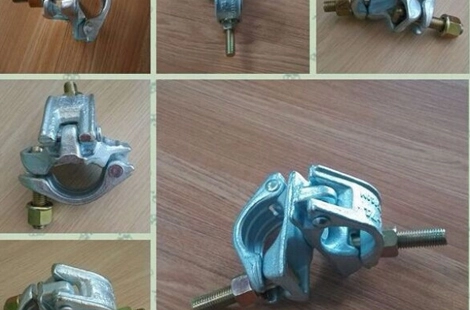
Working in pairs, these heavy-duty fasteners create a completely rigid connection between the building's permanent structural steel framework and the temporary access tubes.
Flange Gripping Mechanics: The clamp is designed to securely grip the edge of an I-beam, H-beam, or tapered steel girder channel without requiring drilling or welding into the permanent structure.
Suspended Staging Support: This anchoring method is invaluable for suspended or cantilevered scaffolding setups, where building a traditional support matrix from the ground level up is physically impossible or cost-prohibitive.
Direct Load Transfer: By securely biting into the structural steel flange, the girder coupler transfers the high tensile and compressive loads of the scaffold matrix directly into the primary building foundation, eliminating structural sway on windy, exposed sites.
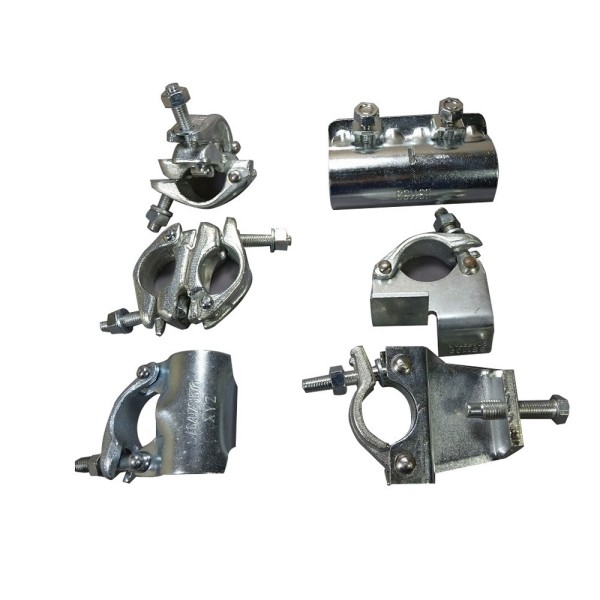
3. Putlog Coupler: Optimizing Board Placements and Working Platform Logistics
While double and girder clamps handle primary structural loading, optimizing worker mobility and reducing physical tripping hazards on working platforms require a different mechanical design. This is where the putlog coupler plays a critical role in on-site asset management.
A putlog coupler is a specialized, single-wrap fastener engineered to connect non-load-bearing tubes, such as intermediate transoms or board bearers, to main horizontal ledgers. The defining engineering feature of this component is its low-profile, flat-lipped design.
Eliminating Obstacles: Traditional structural clamps wrap completely around both intersecting tubes, creating a raised metal obstacle. The unique flat shape of the putlog coupler ensures that the horizontal transom sits practically flush with the main ledgers.
Continuous Smooth Walkways: This sleek profile allows timber, steel, or aluminum scaffold boards to be laid down flat as a continuous, gap-free deck.
Logistical Efficiency: By eliminating raised physical seams and hazardous tipping zones, it optimizes on-site material logistics for site crews pushing wheelbarrows or moving materials, reducing labor fatigue and meeting strict workplace safety regulations.
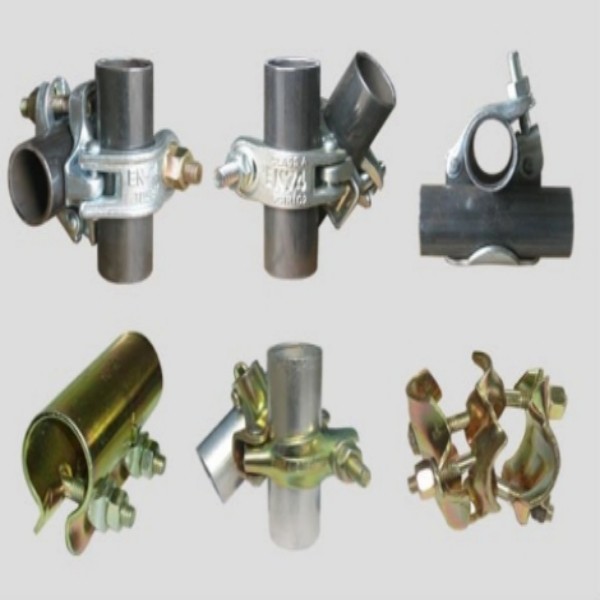
Application and Engineering Overview Matrix
To assist procurement departments and safety engineers during material planning and site layout scheduling, the following overview summarizes the structural functions and engineering roles of each essential clamp configuration:
| Coupler Classification | Primary Target Keyword | Core Engineering Function | Ideal Application Scene | Structural Benefit |
|---|
| Right-Angle Structural Clamp | Double scaffold coupler | Fixes two intersecting scaffold tubes at a rigid 90-degree angle | Main skeletal framework grid, high-load masonry platforms | Superior slip resistance under heavy vertical loads |
| Heavy-Duty Beam Fastener | Girder coupler | Welds temporary access tubes directly to structural steel flanges | Suspended staging, industrial refineries, bridge infrastructure | Safe, rigid load transfer directly into building I-beams |
| Low-Profile Board Bearer | Putlog coupler | Secures non-load-bearing transoms flush with horizontal ledgers | Plastering decks, interior finishing, continuous smooth walkways | Eliminates raised tripping hazards under scaffold boards |
Manufacturing Quality Standards: Materials, Integrity, and Long-Term Durability
While understanding the structural applications of these components is vital for layout design, evaluating their raw manufacturing quality is what guarantees long-term durability and corporate asset protection. High-volume buyers and international contractors must look past initial pricing and verify the metallurgical processing behind their equipment pipeline.
Premium structural clamps must be fabricated using high-strength carbon structural steel, such as Q195 to Q235 steel grades. This material provides the optimal combination of tensile strength and mechanical ductility, allowing the couplers to withstand massive clamping torques without warping, stripping threads, or suffering brittle structural failures.
Equally vital is the implementation of advanced anti-corrosion finishes. Because scaffolding components face harsh oceanic transit conditions and relentless weather exposure on-site, a raw steel surface will oxidize rapidly. Top-tier manufacturing plants utilize high-adhesion industrial paint, specialized pre-galvanizing, or premium hot-dip galvanizing layers to create a resilient physical barrier against rust and daily abrasive impact. Investing in proper manufacturing metrics ensures that your hardware fleet can be securely assembled, stripped, and reused across countless project lifecycles, significantly lowering your long-term capital expenditure.
Conclusion
Maximizing jobsite safety and engineering efficiency requires selecting the exact mechanical tool designed for the specific physical constraint at hand. Whether your incoming infrastructure project demands the rigid 90-degree load distribution of a heavy-duty double scaffold coupler, the robust structural anchoring capabilities of a specialized girder coupler, or the flush, trip-free clearance provided by a reliable putlog coupler, matching your equipment selection to the specific structural node is the key to field success.
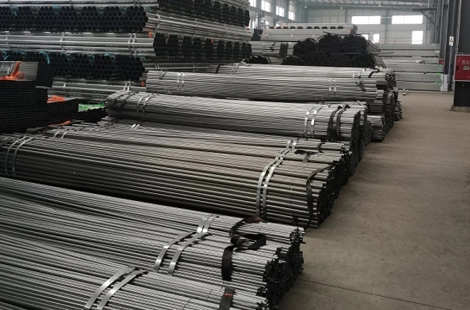
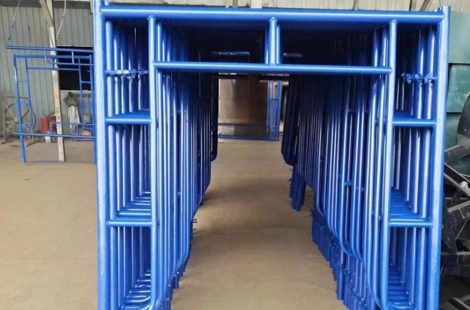
At Sichuan Taishenglan Technology Co., Ltd, we bring over 15 years of industry excellence and manufacturing mastery to international construction markets. Our extensive product line features certified frame layouts, durable steel pipes, and high-performance scaffolding couplers processed under rigid factory quality controls. Driven by our corporate values of safety, reliability, and efficiency, we handle end-to-end logistics for standard container deliveries worldwide. Contact our engineering consultation department today to request a comprehensive catalog, get detailed shipping quotes, or access tailored technical layout support for your next major project.
Frequently Asked Questions (FAQ)
1. Can a putlog coupler be substituted for a double scaffold coupler in heavy-duty load-bearing zones?
No. A putlog coupler is strictly engineered for non-load-bearing applications, such as securing flat transoms to support scaffold boards. For primary load-bearing structural joints where horizontal ledgers meet vertical standards, a heavy-duty double scaffold coupler must always be used to guarantee the necessary slip resistance.
2. How does a girder coupler maintain a secure grip on a steel structural beam?
A structural girder coupler utilizes a specialized heavy-duty clamping jaw that slides over the edge of the steel beam flange. When the integrated high-tensile locking bolts are tightened to the recommended torque setting, the coupler exerts immense mechanical force, creating a non-slip grip that anchors the scaffold framework to the permanent structure.
3. What types of anti-corrosion surface treatments are available for structural scaffolding clamps?
To maximize asset lifespan and combat environmental rust, scaffolding clamps are typically finished with high-adhesion anti-rust paint, specialized pre-galvanizing coatings, or heavy-duty hot-dip galvanizing, providing long-lasting outdoor protection across multiple construction cycles.
4. What are the standardized container packing and shipping capacities for large-scale coupler procurement?
While specific packaging varies based on the total mix of components, specialized export operations bundle couplers into organized, forklift-friendly pallets or heavy-duty woven bags to optimize container weight distribution. This streamlined logistics setup ensures efficient customs handling and maximizes spatial layouts inside standard shipping containers.
 English
 Español
 português
 العربية