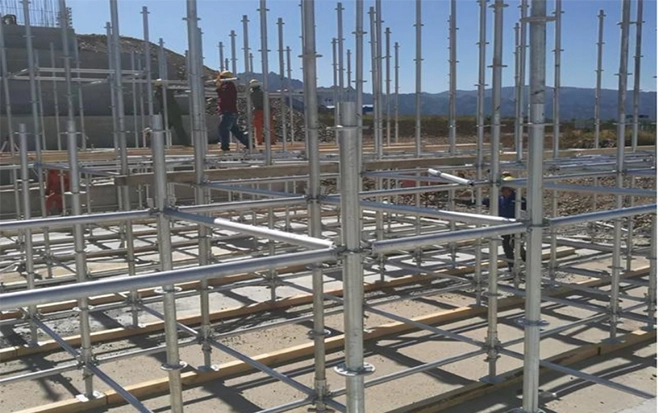
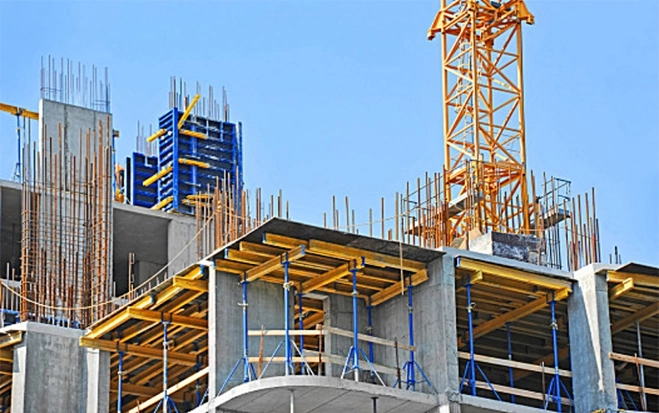
In modern commercial construction, infrastructure engineering, and urban renovation, selecting the right temporary support structure is a critical decision that directly impacts jobsite safety, labor efficiency, and logistics management. Among the various modular access systems available globally, frame scaffolding remains one of the most practical and widely utilized choices across diverse site conditions.
However, professional procurement managers and project engineers know that a frame system must align perfectly with the architectural constraints of the project. The geometrical configuration of a frame system determines its load distribution, stability under lateral forces, and ease of worker movement. Understanding the precise engineering distinctions and factory specifications of an H type scaffolding frame, an A-frame, an X frame scaffolding setup, and an E-frame system is essential for optimizing your on-site execution.
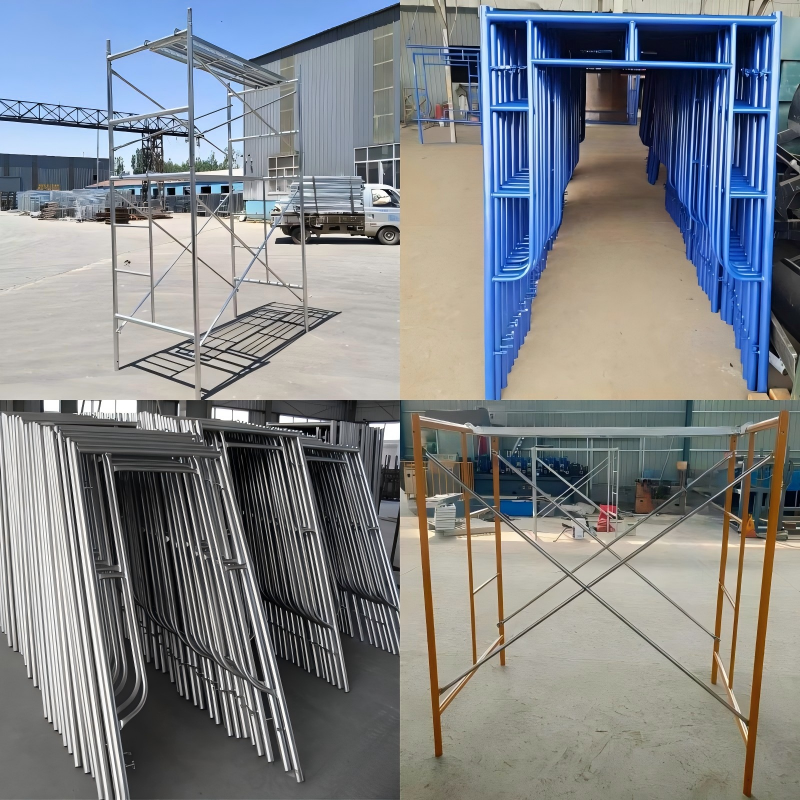
H-Type Scaffolding Frame: Engineering for Masonry and High-Load Platforms
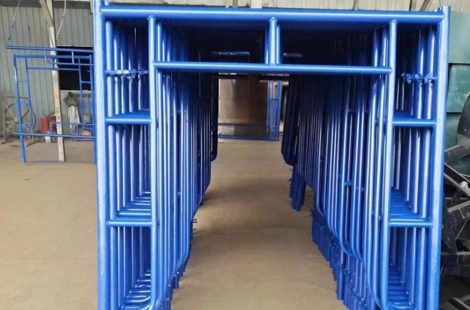
The H type scaffolding frame represents the heavy-duty benchmark for structural masonry and support scaffolding. Characterized by its rigid, vertical post design connected by solid horizontal mid-members, the H type scaffolding configuration is engineered specifically to maximize vertical load-bearing performance.
Key Advantages: Excellent vertical weight distribution, high stability, and reliable anti-deformation structure.
Primary Applications: Heavy masonry platforms, bricklaying stations, concrete formwork support, and temporary building structural frameworks.
Why It Matters: The reasonable frame structure design ensures that weight from heavy material pallets, tools, and multiple workers is distributed evenly down to the foundation without risking localized buckling.
Walk-Thru A-Frame Scaffold: Optimizing On-Site Logistics and Clear Clearance
While pure vertical capacity is paramount for heavy masonry, general building construction, interior finishing, and plastering projects require fluid on-site logistics. This is where the walk-thru A-frame scaffold excels.
Key Advantages: Unobstructed pedestrian pathways, simple structure, and incredibly fast assembly/disassembly requiring minimal tool usage.
Primary Applications: High-traffic jobsites, interior finishing, facade painting, plastering, and commercial building maintenance.
Why It Matters: The open archway of the A-frame scaffold creates clear clearance at the deck level. Workers can seamlessly transport tools and push wheelbarrows directly through the scaffold bays without bending or stepping over braces, drastically reducing labor and time costs.
X-Frame Scaffolding: Enhancing Lateral Rigidity for High-Rise Facade Work
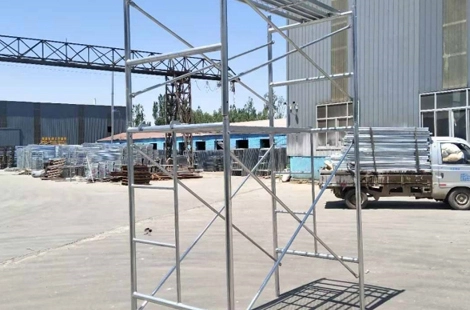
As building heights increase, scaffolding structures face severe lateral forces, most notably horizontal wind loads and dynamic shifts caused by heavy moving equipment. To combat these forces, engineers utilize X frame scaffolding systems.
Key Advantages: Exceptional lateral rigidity, elimination of structural sway, and balanced shear force resistance.
Primary Applications: High-rise facade installations, exterior window glazing, external cladding, and bridge/road construction on windy exposed sites.
Why It Matters: An X frame scaffolding configuration relies on integrated diagonal cross-bracing that intersects to form a rigid "X". This scissor-like design excels at resisting lateral shear forces, transferring horizontal loads safely down to the foundation to keep the working platform completely firm.
E-Frame Scaffolding: Overcoming Structural Constraints in Irregular Architecture
Modern architectural designs frequently feature complex geometries, irregular facades, step-backs, and tight spatial constraints. E-frame scaffolding is a specialized engineering solution designed precisely to overcome these physical limitations.
Key Advantages: High geometric adaptability, multiple built-in lock points, and precise vertical platform micro-adjustments.
Primary Applications: Complex historical building restorations, urban sites with narrow spatial clearance, and irregular structural shapes (balconies, overhangs).
Why It Matters: Featuring a highly adjustable structural layout, E-frames allow for customizable platform heights and staggered deck configurations, enabling engineering teams to custom-tailor the setup to match the building's unique contours.
Factory Specifications & Container Loading Capacities
To ensure accurate logistics planning and cost control for your international procurement, all four frame configurations (H, A, X, E) are manufactured to the following standardized industrial specifications:
Material Grade: High-strength Q195 ~ Q235 Carbon Steel.
Surface Treatment Options: Premium anti-rust Paint or highly durable Pre-galvanizing.
Regular Available Dimensions (Height x Width x Length):
1.7M * 0.95M * 1.82M
1.7M * 1.25M * 1.82M
1.8M * 0.95M * 1.82M
Standard Component Parts (Per Set): 2 pieces of main Frame + 2 sets of matching Cross Braces + 4 pieces of Joint Pins.
Container Loading Efficiency:
Material Grade and Surface Treatment: The Hard Metrics Behind Frame Durability
While frame geometry dictates structural behavior on-site, the metallurgical specifications determine your asset's long-term investment durability. Professional buyers must focus on raw material grades and anti-corrosion treatments to ensure maximum cost-efficiency.
Premium frame systems utilize high-strength Q195 to Q235 carbon steel. This material range offers the optimal balance of tensile strength and ductility, ensuring that the frames can absorb daily high load-bearing demands without bending. Equally critical is the surface treatment chosen for outdoor protection. Finished with either specialized anti-rust Paint or a highly durable Pre-galvanizing layer, these frames gain a vital shield against moisture and daily abrasive wear. By selecting the correct material metrics and surface finishes, contractors ensure that their scaffolding frames can be securely reused across multiple project cycles, significantly driving down fixed asset replacement costs.
Conclusion
Selecting the right scaffolding configuration is a vital step in balancing jobsite safety, structural load demands, and overall project logistics. Whether your project requires the stable vertical capacity of an H type scaffolding system, the smooth material logistics of a walk-thru A-frame, the wind-resistant lateral rigidity of X frame scaffolding, or the spatial flexibility of an E-frame, matching the physical tool to the specific building constraint is the key to operational success.
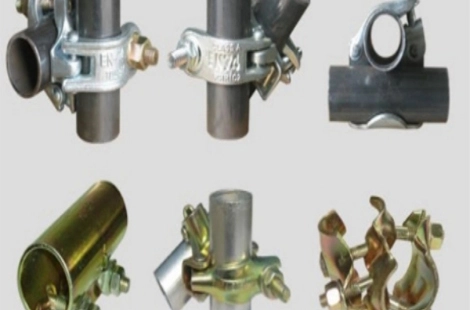
At Taishenglan Technology, we combine over 15 years of manufacturing excellence with precision Q195-Q235 steel fabrication to deliver globally trusted scaffolding solutions, durable steel pipes, and high-performance scaffolding couplers. Choosing our systems means choosing invisible support—and visible peace of mind. Contact our sales consultancy team today to receive a precise shipping quotation for 20GP/40HQ containers or customized structural calculation support for your next project.
Frequently Asked Questions (FAQ)
1. What are the standard dimensions available for H, A, X, and E frame scaffolding?
Our standard frame systems are manufactured in three highly compatible regular sizes to fit international engineering needs: 1.7M*0.95M*1.82M, 1.7M*1.25M*1.82M, and 1.8M*0.95M*1.82M.
2. What components are included in a standard shipping set of frame scaffolding?
Each standard shipping set is precisely configured for rapid site assembly and includes: 2 pieces of the main frame, 2 sets of matching diagonal cross braces, and 4 pieces of joint pins for secure vertical stacking.
3. How many sets of frame scaffolding can fit into standard 20GP and 40HQ shipping containers?
For optimized sea freight efficiency, a standard 20GP shipping container holds between 200 to 230 complete sets, while a high-capacity 40HQ container holds between 500 to 550 complete sets, depending on the specific frame width selected.
4. What are the surface treatment options and what are their benefits?
We offer two primary surface treatments: high-adhesion Paint and Pre-galvanizing. Both options provide excellent anti-rust protection and resistance to harsh outdoor weather conditions, ensuring high durability and a long asset lifespan over multiple reuses.
 English
 Español
 português
 العربية