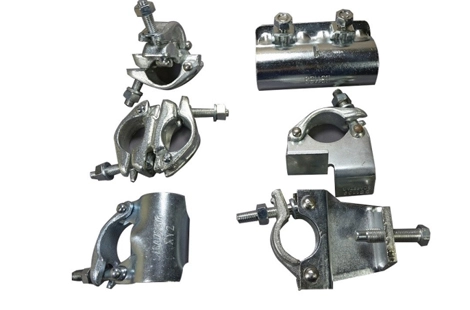
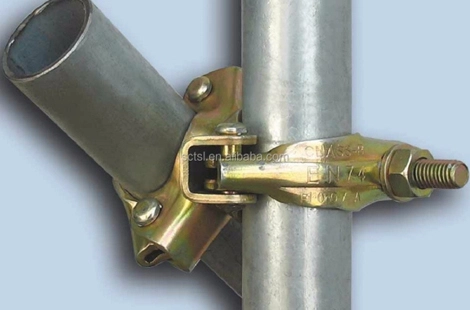
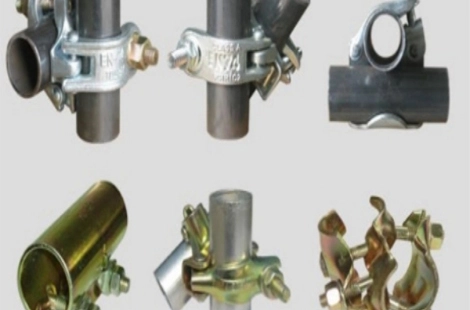
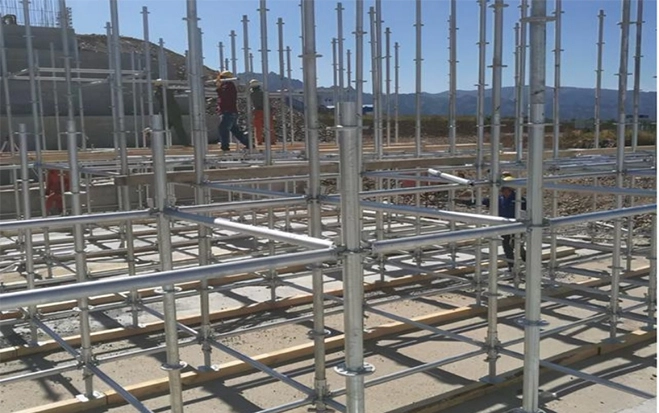
Two right angle couplers can have the same nominal dimensions and still perform differently in actual scaffold applications. One may provide a firm, consistent connection, while another with seemingly identical measurements may behave differently because of variations in material properties, manufacturing accuracy, jaw geometry, fastening components, or surface treatment.
The reason is that product size describes only one part of a coupler's specification. The way steel is selected and processed, the tolerances maintained during production, the shape of the contact surfaces, and the quality of the finished components can all influence connection performance. For contractors and distributors, this means that comparing couplers by dimensions or appearance alone does not necessarily provide a reliable basis for procurement.
This principle also matters when buyers compare related scaffold connection products, including girder coupler and girder coupler scaffolding components. A girder coupler is designed for a different connection purpose from a standard right angle coupler, so the two should not be treated as interchangeable. However, both demonstrate the same important purchasing principle: nominal size does not tell the whole story about mechanical performance.
So, why can two right angle couplers with the same size perform differently? The answer lies in what happens between the raw material and the finished connection.
Does Steel Grade Determine the Strength and Load-Bearing Performance of a Coupler?
Steel is one of the fundamental factors behind coupler performance, but the stated steel grade does not provide a complete assessment of the finished component. Mechanical properties, material consistency, manufacturing process, heat treatment where applicable, and quality inspection all contribute to the characteristics of the final product.
Two couplers can have similar dimensions while using different steel specifications or different levels of material control. Variations in tensile strength, yield strength, ductility, and toughness can influence how a component responds to loading and deformation. A coupler intended for demanding scaffold applications needs a material specification that is appropriate for both its design and manufacturing process.
A coupler can also experience more than one type of force during service. Depending on the scaffold arrangement, the connection may be exposed to clamping forces, shear, bending effects, or combinations of these conditions. The steel therefore has to work together with the geometry of the coupler rather than being considered as an isolated specification.
The same principle applies to girder coupler scaffolding. When a connection component forms part of a temporary support or scaffold arrangement, buyers need to understand the complete product specification rather than assuming that two components with identical nominal dimensions have equivalent mechanical properties.
For professional procurement, material certificates, technical specifications, and relevant test documentation can provide much more useful information than a catalogue photograph or a general claim such as “high-strength steel.”
How Can Forging, Pressing, and Heat Treatment Change Coupler Performance?
Manufacturing method is another reason why two apparently identical couplers may behave differently. The production process determines how the raw material is formed and how consistently the finished component achieves its intended geometry.
Forging, pressing, and casting can all be used to produce metal components, but each manufacturing route has different process requirements. Forging, for example, forms the material under controlled mechanical pressure and can be used to produce robust connection bodies. Pressing can also be suitable for particular component designs, while casting may be appropriate where the geometry and production process call for it.
However, the manufacturing label alone should not be treated as proof of superior performance. A forged component is not automatically better than every pressed or cast alternative. Material quality, tooling accuracy, process control, heat treatment, dimensional consistency, and final inspection all contribute to the characteristics of the finished coupler.
Heat treatment can further modify the mechanical properties of steel where the selected material and manufacturing process require it. When properly controlled, it can help achieve the intended balance between strength and toughness. Inconsistent treatment, on the other hand, can introduce unwanted variation between components or production batches.
This becomes particularly relevant when purchasing large quantities of girder coupler products or other scaffold fittings. A professional manufacturer needs to maintain consistent production conditions so that components carrying the same product specification remain within the required performance range from batch to batch.
For buyers, the more useful question is therefore not simply whether a coupler is forged or pressed. It is whether the manufacturing process is properly controlled and whether the finished components are verified against the required specifications.

Why Do Dimensional Tolerances Affect Tube Fit, Clamping Force, and Slip Resistance?
Nominal dimensions are target values rather than guarantees that every individual component will have exactly the same measurement. Manufacturing tolerances define the acceptable variation around those target dimensions, and the consistency of those tolerances can influence how the coupler interacts with the scaffold tube.
Consider two couplers that are both specified for the same tube size. If one manufacturer maintains tight and consistent dimensional control while another allows greater variation, the two products may have noticeably different fits even though their catalogue dimensions appear identical.
The relationship between the coupler jaws and the tube surface is particularly important. A properly designed and manufactured connection allows the fastening system to establish the intended clamping condition. If the geometry varies excessively, contact between the coupler and tube may become less consistent, which can affect the behaviour of the connection.
This does not mean that tighter tolerances are automatically better. Tolerances need to be appropriate for the complete product design and manufacturing process. What matters most is that the manufacturer establishes suitable dimensional limits and consistently keeps production within them.
| Performance Factor | What May Differ Between Similar Couplers | Why It Matters |
|---|
| Steel specification | Material properties and consistency | Can influence strength, toughness, and deformation resistance |
| Manufacturing process | Forging, pressing, casting, tooling, and process control | Can affect component structure and dimensional consistency |
| Dimensional tolerance | Actual variation from nominal dimensions | Influences tube fit and consistency of clamping |
| Jaw geometry | Contact shape, alignment, and surface profile | Affects tube engagement and connection stability |
| Bolt and thread | Material, dimensions, thread accuracy, and finish | Influences tightening and maintenance of clamping force |
| Surface treatment | Coating type, coverage, and process consistency | Affects corrosion protection and service durability |
| Quality control | Inspection procedures and acceptance criteria | Influences consistency between individual components and batches |
For this reason, professional buyers should consider dimensional control when comparing girder coupler scaffolding components as well as right angle couplers. A nominal measurement is useful for identifying compatibility, but manufacturing consistency determines how reliably the finished products meet that specification.
How Do Jaw Geometry and Housing Design Influence Connection Stability?
The geometry of a coupler determines how forces are transferred through the connection. Differences in jaw shape, contact area, housing thickness, alignment, and internal geometry can therefore affect how the component behaves when the fastening system is tightened and when the connection is subjected to service loads.
A well-designed jaw should engage with the tube in a predictable and consistent manner. The housing also needs to maintain its intended shape under the forces generated during tightening and service. Excessive deformation can change the relationship between the connected members and affect the behaviour of the joint.
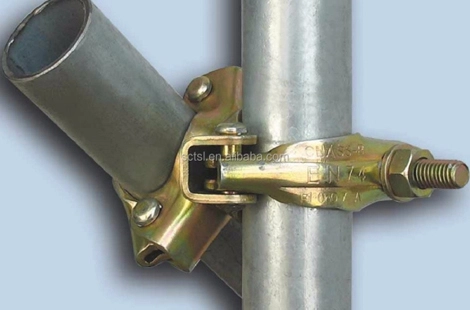
This is one reason visual comparison can be misleading. Two couplers may have the same overall length, width, and nominal tube compatibility while having different internal geometries. Measurements taken from the outside do not necessarily reveal how the contact surfaces are shaped or how forces are distributed through the housing.
The same consideration applies when evaluating a girder coupler. Although a girder coupler serves a different connection purpose from a right angle coupler, its performance still depends on the interaction between its housing, contact surfaces, fastening system, and connected structural members.
For contractors, the practical objective is to select a coupler whose geometry has been engineered and tested for the intended application rather than assuming that similar external dimensions indicate equivalent performance.
What Role Do Bolt Grade, Thread Quality, and Tightening Performance Play?
The coupler body is only one part of the connection. The bolt and nut assembly plays an equally important role because it generates the clamping force that secures the connected members.
Differences in bolt material, dimensions, thread accuracy, nut compatibility, and surface condition can therefore create differences between otherwise similar couplers. A strong coupler body paired with inconsistent or unsuitable fastening components cannot be expected to perform in the same way as a properly matched assembly.
Thread quality is particularly important during installation. Damaged, contaminated, poorly formed, or incompatible threads can affect how the nut engages with the bolt and how consistently the assembly can be tightened. The condition of the bolt and nut should therefore be considered part of the connection rather than treated as secondary hardware.
Tightening also needs to follow the manufacturer's specified procedure. Excessive tightening does not automatically create a better connection, while insufficient tightening may prevent the assembly from developing the intended clamping condition. The appropriate installation method depends on the design of the particular coupler and the requirements of the application.
This is another reason two couplers with the same nominal dimensions may produce different practical results. Their external dimensions may match, while the quality and consistency of the fastening components are different.
How Do Surface Treatment and Manufacturing Quality Control Affect Long-Term Reliability?
Surface treatment is often the most visible difference between steel couplers, but its role goes beyond appearance. Scaffold components can be exposed to rain, humidity, dust, concrete residue, repeated handling, transportation, and outdoor storage. Suitable corrosion protection helps maintain the condition of the steel during its intended service life.
Galvanized finishes are commonly used for steel scaffolding components because zinc provides a protective coating over the underlying steel. However, the durability of the finished surface depends on coating quality, coverage, handling, storage, and environmental exposure.
A damaged coating can expose the underlying steel, while inconsistent surface treatment between production batches can result in differences in corrosion resistance. This becomes increasingly relevant for couplers that are transported, installed, dismantled, and reused across multiple projects.
Manufacturing quality control brings these factors together. Material inspection, tooling checks, dimensional inspection, fastener verification, surface-treatment inspection, and final product assessment can all help ensure that finished couplers remain within the intended specification.
For buyers comparing products for demanding construction applications, this type of production consistency can be more meaningful than simply asking whether a coupler has been manufactured to a particular nominal size. A supplier with established inspection and process-control procedures can provide greater confidence that different batches will remain consistent.
TSL Scaffolding supplies components for professional construction applications, and the relationship between individual fittings and the wider scaffold system is an important consideration during procurement. Buyers evaluating connection hardware can also review the company's scaffolding products and connection components to consider how different components fit into their broader project requirements.
Where a project has specific requirements for dimensions, materials, surface treatment, quantities, or other specifications, confirming those details before ordering can help avoid unnecessary substitutions. Buyers can discuss their coupler requirements with TSL Scaffolding before finalizing a specification or procurement plan.
Why Should Buyers Look Beyond Size When Comparing Couplers?
Size remains an essential starting point because a coupler must be compatible with the intended scaffold tube or structural member. It simply should not be treated as the only selection criterion.
When two products have the same nominal dimensions, buyers should look further into their material specification, manufacturing process, dimensional tolerances, jaw and housing design, fastening components, surface treatment, and quality-control procedures. These details help explain why products that appear interchangeable in a catalogue may behave differently in actual applications.
The same principle is useful when comparing girder coupler scaffolding products. Rather than relying on a product name or nominal size, professional procurement should focus on the complete technical specification and the consistency with which the manufacturer can reproduce it.
Conclusion
Two right angle couplers can have the same nominal size without having identical performance. Their differences may come from the steel itself, the way the material is formed and treated, dimensional tolerances, jaw geometry, housing design, fastening components, surface protection, or the quality-control system behind production.
For contractors and distributors, this means that coupler selection should go beyond checking dimensions. A meaningful technical comparison considers the complete manufacturing and performance picture. The same approach applies when evaluating related connection products such as a girder coupler or girder coupler scaffolding component.
When material specifications, manufacturing consistency, dimensional accuracy, connection geometry, fastener quality, and surface treatment are evaluated together, buyers have a much clearer basis for distinguishing genuinely comparable products from couplers that only appear identical on paper.
Frequently Asked Questions
1. Can two right angle couplers with the same size have different strength?
Yes. Steel properties, manufacturing method, geometry, dimensional tolerances, fasteners, and quality control can all affect the mechanical performance of a coupler.
2. Does a higher steel grade always mean a better coupler?
Not necessarily. The steel must be appropriate for the product design and manufacturing process. Overall performance depends on material, geometry, production control, and testing together.
3. Why are dimensional tolerances important for scaffold couplers?
They affect how consistently the coupler fits the intended tube and how the jaws engage with its surface. Consistent dimensions help provide more predictable assembly and clamping.
4. Does forging automatically make a coupler stronger?
No. Forging can produce robust components, but material selection, process control, heat treatment, tooling, dimensional accuracy, and final inspection also influence performance.
5. Why are bolts important in a right angle coupler?
The bolts and nuts generate the clamping force that secures the connection. Bolt material, thread quality, compatibility, and correct tightening all affect the finished connection.
6. Is a girder coupler the same as a right angle coupler?
No. They are connection components designed for different applications and configurations. The appropriate product should be selected according to the intended connection and its technical requirements.
 English
 Español
 português
 العربية