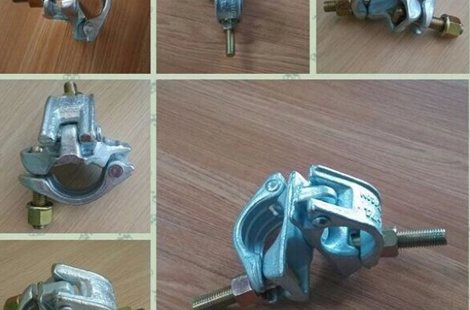
Heavy-duty scaffolding depends on the reliability of every connection, and a right angle coupler is one of the components that directly determines how scaffold tubes are joined and held in position. When a scaffold frame needs to maintain a fixed 90-degree connection under substantial working loads, the coupler has to provide more than a basic mechanical connection. Its material, manufacturing quality, jaw geometry, bolt arrangement, dimensions, and surface protection all influence how reliably it performs on site.
This is why choosing a scaffolding right angle coupler for demanding applications requires more than comparing appearance or unit price. A coupler may look similar to another product while having significant differences in steel quality, casting or forging method, bolt strength, clamping performance, and dimensional consistency.
For contractors, scaffold rental companies, and distributors evaluating right angle coupler scaffolding components, the following factors provide a practical way to determine whether a coupler is appropriate for heavy-duty use.
How Does Coupler Load Capacity Affect Heavy-Duty Scaffold Connections?
Load capacity is one of the first specifications to examine when selecting a scaffolding right angle coupler. In a heavy-duty scaffold, the coupler is not simply holding two tubes together. It forms part of the structural connection through which forces are transferred between scaffold members.
The actual loading condition depends on the scaffold configuration, tube arrangement, connection spacing, bracing, working platforms, applied loads, and the overall temporary works design. A coupler should therefore not be selected according to a generic load figure without considering how it will be used.
Another important distinction is between the load capacity of an individual coupler and the capacity of the complete scaffold system. Even when a coupler has suitable mechanical performance, the overall scaffold remains dependent on the tubes, standards, ledgers, braces, base conditions, ties, and other components used in the assembly.
When comparing right angle coupler scaffolding products, contractors should look for documented test results or technical information that identifies the relevant performance requirements. A clear specification makes it easier to determine whether the coupler is suitable for the intended scaffold configuration rather than relying on an unsupported capacity claim.
Which Steel Grade and Manufacturing Method Provide Better Coupler Strength?
The steel used for a coupler has a direct relationship with its mechanical performance and durability. However, steel grade alone does not tell the entire story. Manufacturing method, heat treatment where applicable, dimensional control, and quality inspection can all influence the final characteristics of the component.
Right angle couplers are commonly produced using manufacturing processes such as drop forging, pressing, or casting, depending on the product design and intended application. For heavy-duty scaffolding, buyers should understand which process is used and whether the finished component has been tested to the relevant requirements.
Forged components are often valued for their ability to provide a robust connection body, while other manufacturing methods can also produce suitable products when properly engineered and controlled. The important consideration is not simply whether a supplier uses a particular production method, but whether the finished scaffolding right angle coupler consistently meets the required mechanical and dimensional specifications.
Material traceability can also become important for professional procurement. When purchasing large quantities, contractors and distributors may want documentation covering material specifications, production controls, testing, and inspection. These details provide a more reliable basis for evaluating suppliers than product photographs alone.

How Do Jaw Design and Bolt Configuration Improve Connection Stability?
The connection between two scaffold tubes depends heavily on how the coupler's jaws engage with the tubes and how effectively the fastening system maintains clamping force. This makes jaw geometry and bolt configuration particularly important for heavy-duty applications.
A well-designed jaw should provide consistent contact around the tube surface without creating unnecessary local deformation. The dimensions of the jaw must correspond to the intended scaffold tube size, while the body should maintain its geometry when the fastening system is tightened correctly.
The bolt and nut assembly is equally important. The fastener must work with the coupler body to generate the required clamping force and maintain the connection during service. Thread quality, nut engagement, bolt dimensions, and the condition of the fastening components all deserve attention during inspection.
For right angle coupler scaffolding, the fixed 90-degree relationship between the connected tubes is another critical consideration. A properly manufactured coupler should maintain the intended angle when correctly installed, helping the scaffold frame retain its designed geometry.
In practice, even a high-quality scaffolding right angle coupler can perform poorly if the tube surfaces are heavily contaminated, the wrong tube diameter is used, or the fastener is incorrectly installed. Product quality and correct installation therefore need to be considered together.
Why Do Tube Fit and Coupler Dimensions Matter for Heavy-Duty Scaffolding?
Dimensional compatibility is easy to underestimate. A coupler needs to fit the scaffold tubes for which it was designed. If the tube diameter does not correspond to the coupler's intended specification, the connection may not develop the expected clamping condition.
This is particularly important when contractors source scaffold components from different manufacturers. Nominally similar products may have different dimensional tolerances, and combining incompatible components can create installation or performance problems.
When evaluating a scaffolding right angle coupler, buyers should confirm the compatible tube diameter and review the relevant dimensional tolerances. The coupler body, jaws, bolt holes, and fastening components should be manufactured consistently enough to allow proper assembly without excessive looseness or forced fitting.
| Selection Factor | What Buyers Should Examine | Why It Matters |
|---|
| Load performance | Documented mechanical or test data | Helps determine suitability for the intended scaffold configuration |
| Material | Steel specification and material consistency | Provides a basis for evaluating mechanical performance and durability |
| Manufacturing method | Forging, pressing, casting, or other specified process | Influences component structure and production consistency |
| Jaw design | Contact geometry and tube engagement | Supports stable clamping around the connected tubes |
| Fasteners | Bolt, nut, thread, and dimensions | Determines how clamping force is generated and maintained |
| Tube compatibility | Specified tube diameter and dimensional tolerance | Ensures the coupler fits the intended scaffold tubes |
| Surface treatment | Galvanized or other protective finish | Helps protect the component against environmental exposure |
For distributors and large-volume buyers, dimensional consistency across production batches can be just as important as the nominal dimensions themselves. Consistent components are easier to assemble and inspect across multiple scaffold projects.
How Does Surface Treatment Protect Right Angle Couplers in Demanding Site Conditions?
Scaffolding components are often exposed to rain, humidity, dust, concrete residue, handling damage, and repeated transportation. Without suitable corrosion protection, steel surfaces can deteriorate over time, particularly when components are stored or used outdoors.
Surface treatment should therefore be considered as part of the product specification rather than as a purely cosmetic feature. Galvanized finishes are commonly used for scaffold components because the zinc coating provides a protective barrier and can offer sacrificial protection to exposed steel.
The actual durability of a finish depends on coating quality, thickness, handling, environmental exposure, and subsequent damage. A galvanized scaffolding right angle coupler can still develop corrosion if the protective surface is severely damaged or if the product is stored in unsuitable conditions.
For projects involving frequent reuse, buyers should also consider how the surface finish holds up during transportation, installation, dismantling, and storage. The ability to inspect the component easily is another practical advantage when maintaining a large inventory of right angle coupler scaffolding products.
TSL Scaffolding offers a range of scaffolding-related products for professional construction applications. Reviewing the broader TSL Scaffolding product range can help buyers consider right angle couplers alongside the other components required for a complete scaffold system.
What Quality and Safety Checks Should Contractors Make Before Using Heavy-Duty Right Angle Couplers?
Product quality does not end when a coupler leaves the factory. Before a scaffolding right angle coupler is used, contractors should make sure the component is appropriate for the intended scaffold system and is free from visible defects that could affect its performance.
The coupler body should be checked for cracks, significant deformation, excessive corrosion, or other damage. The jaws should remain properly shaped, and the bolt and nut should be in usable condition with undamaged threads. Any component that has been visibly distorted or damaged during previous use should be assessed according to the applicable inspection procedure rather than automatically returned to service.
Fit should also be confirmed before installation. The coupler should correspond to the correct scaffold tube size, and the connection should be assembled according to the manufacturer's instructions. Improvised combinations of incompatible tubes, fasteners, or coupler components can undermine the assumptions behind the product's performance data.
For professional procurement, factory quality control is another important part of the equation. Buyers may want to confirm how incoming materials are checked, how dimensions are controlled during production, how fasteners are inspected, and what final testing is carried out before shipment.
These considerations become especially relevant when sourcing right angle coupler scaffolding in bulk. Consistent quality across an entire shipment can have a direct impact on installation, inspection, and inventory management across multiple projects.
Where a project has specific technical or supply requirements, discussing them with the manufacturer before ordering can help avoid specification mismatches. TSL Scaffolding can be contacted directly through its contact page to discuss product requirements, quantities, and other procurement details.
Conclusion
A heavy-duty scaffolding right angle coupler needs to do more than connect two scaffold tubes at a nominal 90-degree angle. Its suitability depends on mechanical performance, steel quality, manufacturing consistency, jaw geometry, fastener design, dimensional compatibility, and resistance to the conditions in which it will be used.
For contractors and distributors sourcing right angle coupler scaffolding, the most useful approach is to look beyond catalogue appearance and unit price. Reviewing technical specifications, manufacturing information, tube compatibility, surface treatment, inspection procedures, and supplier consistency provides a much clearer basis for comparing products.
When these factors are considered together, buyers can select couplers that are aligned with the requirements of the intended scaffold system and establish a more reliable basis for procurement, installation, inspection, and repeated use.
Frequently Asked Questions
1. What is a scaffolding right angle coupler?
A scaffolding right angle coupler is a mechanical fitting used to connect two scaffold tubes at a fixed 90-degree angle. It is commonly used where rigid tube-to-tube connections are required.
2. Why is load capacity important for a right angle coupler?
The coupler forms part of the connection through which forces are transferred between scaffold members. Its documented mechanical performance should therefore be appropriate for the intended scaffold configuration.
3. Are forged right angle couplers suitable for heavy-duty scaffolding?
Forging can produce robust coupler bodies, but suitability depends on the complete product design, material specification, manufacturing controls, and applicable performance requirements rather than the manufacturing method alone.
4. Why does tube diameter matter when selecting a right angle coupler?
The coupler must be dimensionally compatible with the scaffold tubes. Incorrect tube and coupler dimensions can affect fitting, clamping, and connection performance.
5. Is galvanizing important for right angle coupler scaffolding?
Galvanizing can improve corrosion protection and is commonly used for steel scaffolding components exposed to demanding environments. The actual service life also depends on coating quality, handling, storage, and exposure.
6. What should contractors inspect before using a heavy-duty right angle coupler?
Inspect the coupler body, jaws, bolts, nuts, threads, surface condition, and dimensional fit. Components showing significant cracks, deformation, severe corrosion, or other defects should be assessed before use.
 English
 Español
 português
 العربية