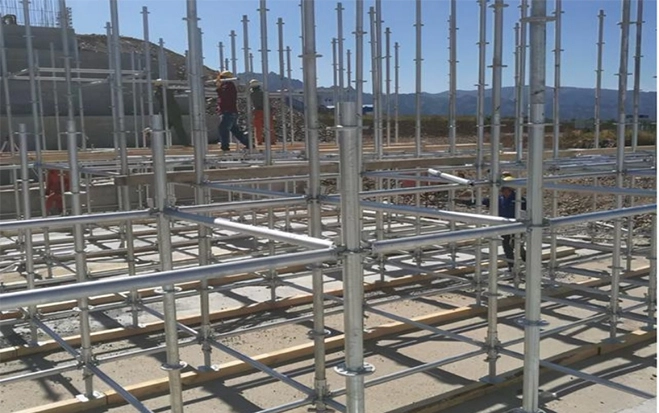
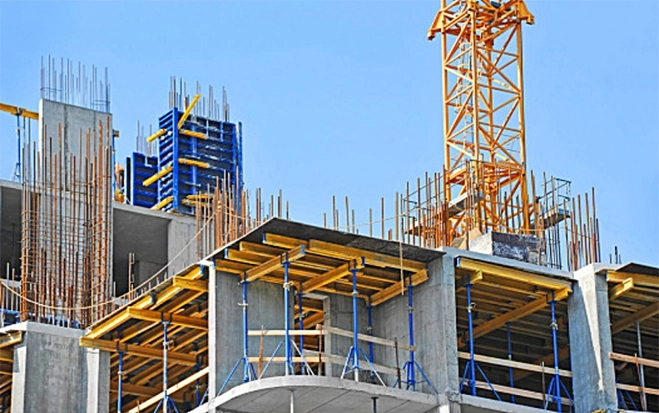
Choosing the right shoring post starts with a simple question: what exactly does the support need to do on site? For a temporary slab, beam, formwork system, or other construction application, the answer depends on much more than the post's maximum height. Working height, load requirements, adjustment range, tube dimensions, locking method, corrosion protection, and site conditions all affect whether a post is suitable for the job.
This is particularly important when comparing adjustable steel shoring posts from different manufacturers. Two products may look similar but have different load ratings, adjustment mechanisms, material specifications, or working ranges. Understanding these differences before purchasing can help contractors and distributors avoid selecting a post based only on price or appearance.
For buyers comparing adjustable shoring posts for sale, the following factors provide a practical way to evaluate the right specification for a particular project.
What Working Height and Adjustment Range Does Your Project Require?
The first consideration is the actual height that the shoring post needs to cover. Measure the distance between the supporting surfaces at the intended installation point, taking into account the thickness of formwork, beams, base plates, or other components that will sit between the post and the supported structure.
It is also worth looking beyond the maximum extended height. A post should provide a practical adjustment range around the required working height rather than being used at the very limit of its extension. The relationship between working height and allowable load is particularly important because the rated capacity of a post can vary depending on its extension and installation configuration.
Projects rarely have perfectly uniform dimensions. A contractor may need to support several areas with slightly different heights, especially on renovation projects or structures with varying floor levels. In these situations, adjustable steel shoring posts can provide greater flexibility than fixed-length supports and may reduce the number of different post sizes required on site.
When reviewing adjustable shoring posts for sale, therefore, buyers should compare the minimum height, maximum height, adjustment method, and usable working range rather than focusing on a single maximum-height figure.
How Should Load Capacity Affect Your Choice of Adjustable Steel Shoring Posts?
Once the required height is established, load capacity becomes one of the most important technical considerations. The post may need to support more than the weight of the structure itself. Depending on the application, the temporary support system can also be affected by formwork, fresh concrete, construction materials, workers, equipment, and other temporary loads.
However, determining the required capacity is not simply a matter of dividing the total project load by the number of posts. Loads may not be distributed evenly, and the actual structural arrangement can affect how forces are transferred through the temporary works system.
For this reason, buyers should request manufacturer load data for the specific post configuration they intend to use. A reliable specification should make it possible to understand how allowable capacity relates to working height and extension. This is more useful than relying on a single headline capacity printed in a product catalogue.
When comparing adjustable steel shoring posts, it is also important to distinguish between the manufacturer's product rating and the capacity required by the project's temporary works design. The post should be selected as part of the complete support system and used within the manufacturer's stated limitations.

Which Tube Diameter, Wall Thickness, and Dimensions Should You Consider?
The tubes form the main structural body of an adjustable shoring post, so their dimensions deserve careful attention. Tube diameter, wall thickness, material properties, extension length, and the connection between the inner and outer tubes all contribute to the performance of the finished product.
A larger tube does not automatically mean that a post is suitable for a particular application. Structural performance depends on the complete design rather than one dimension in isolation. Buyers should therefore look at the manufacturer's technical specifications instead of judging a post simply by its visual size.
When evaluating adjustable shoring posts for sale, useful dimensional information can include the outer and inner tube dimensions, wall thickness, overall length, adjustment-hole arrangement, base plate dimensions, and product weight. These details make it easier for contractors and distributors to compare products from different suppliers on a like-for-like basis.
| Selection Factor | What to Compare | Why It Matters |
|---|
| Working height | Minimum and maximum dimensions and practical adjustment range | Determines whether the post fits the intended support location |
| Load capacity | Allowable load at the required extension | Helps match the product to the temporary works design |
| Tube construction | Diameter, wall thickness, and material specification | Provides information about the structural design of the post |
| Adjustment system | Adjustment holes, pins, threaded collar, or combined mechanism | Affects positioning and installation efficiency |
| Base and top plates | Dimensions, thickness, and connection configuration | Influences how loads are transferred at the support points |
| Surface treatment | Paint, powder coating, galvanizing, or other specified finish | Helps protect the steel against the expected environment |
How Do Locking and Adjustment Mechanisms Affect Shoring Post Selection?
The adjustment mechanism is easy to overlook when comparing shoring posts, yet it has a direct effect on installation. A post may have the right dimensions and capacity but still be inconvenient to use if the adjustment and locking system is difficult to operate.
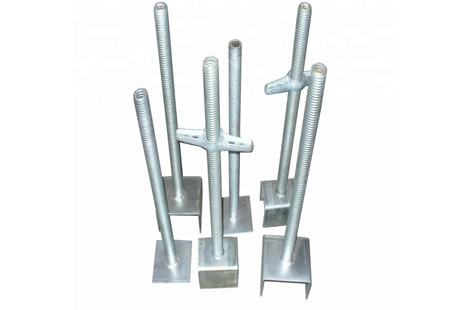
Many adjustable designs use a series of holes and a locking pin for coarse height adjustment, while a threaded collar provides finer positioning. The precise configuration varies between products, so buyers should check how the mechanism works rather than assuming that all adjustable posts operate in the same way.
The locking components deserve particular attention. The pin, collar, thread, and connection points should be manufactured to work as an integrated system. Excessive wear, deformation, damaged threads, or an incorrectly fitted locking component can affect the safe use of the post.
For contractors using large quantities of adjustable steel shoring posts, ease of adjustment can also have a practical impact on productivity. A straightforward mechanism can make it easier for workers to position multiple supports accurately, particularly where working heights vary across the site.
Even so, convenience should never take priority over the manufacturer's installation requirements. The adjustment mechanism must be used in the configuration for which the post has been designed.
What Materials and Surface Treatments Should You Look for in Steel Shoring Posts?
The steel itself is only part of the specification. Manufacturing quality, welding, dimensional consistency, and surface treatment can all affect the durability of a shoring post, particularly when the same supports are expected to be used across multiple projects.
The appropriate surface treatment depends on the environment. A conventional protective coating may be suitable for many indoor or relatively controlled construction applications, while projects involving prolonged outdoor exposure or high humidity may require a different level of corrosion protection.
Common finishes include painted surfaces, powder coating, and hot-dip galvanizing. Each has different characteristics, and the right choice depends on the intended application, storage conditions, exposure, and expected service life.
This is also where supplier consistency becomes important. A professional manufacturer should be able to provide clear information about materials, dimensions, surface treatment, and quality-control procedures. For contractors assessing different support products, the wider TSL Scaffolding product range provides useful context for evaluating temporary support and scaffolding solutions alongside the requirements of a particular project.
Which Project Conditions Should Be Considered Before Selecting Adjustable Steel Shoring Posts?
Even a technically suitable post needs appropriate installation conditions. Before ordering adjustable steel shoring posts, buyers should consider what the site will actually be like when the supports are installed.
The first issue is the supporting surface. The base and top of the post need suitable bearing conditions so that loads can be transferred as intended. A strong post cannot compensate for an unstable, weak, uneven, or damaged supporting surface.
Space and access can also influence the choice. On a crowded construction site, workers may need to move, position, and adjust a large number of posts in confined areas. Product weight and handling characteristics can therefore become practical considerations, particularly on projects with repeated installation and removal.
Storage and reuse are equally relevant for contractors purchasing adjustable shoring posts for sale in larger quantities. Posts that are repeatedly transported between projects should be inspected for bent tubes, damaged threads, distorted plates, excessive corrosion, and worn locking components. A post that has suffered visible deformation or other significant damage should not simply be returned to service without appropriate assessment.
The surrounding construction environment should also be considered. Outdoor exposure, moisture, contact with concrete or other materials, restricted access, and the frequency of repositioning can all influence which product specification makes practical sense.
Ultimately, the post should be treated as one component of the temporary works system. Project-specific engineering requirements, applicable regulations, manufacturer instructions, and site procedures should determine how the support is selected and installed.
What Should Buyers Look for When Comparing Adjustable Shoring Posts for Sale?
Price is naturally important when sourcing construction equipment, but it rarely tells the whole story. A low-cost post may become more expensive in practice if its working range is unsuitable, technical information is limited, or its components are not designed for the intended reuse cycle.
A more useful comparison considers the complete specification. Buyers can start by matching the required working height and load conditions, then compare tube dimensions, adjustment mechanisms, surface treatment, base and top plate design, and available technical documentation.
For larger commercial orders, supplier capability also matters. Buyers may need to discuss quantities, packaging, delivery requirements, quality inspection, product customization, or specific technical documentation before finalizing an order. Having these details confirmed in advance can reduce misunderstandings later in the procurement process.
For a project where the required specifications are already known, discussing the application directly with the manufacturer can also be more efficient than choosing from generic adjustable shoring posts for sale listings. TSL Scaffolding can be approached through its contact page to discuss project requirements and obtain relevant product information before making a purchasing decision.
Conclusion
The right adjustable steel shoring posts should be selected according to the actual requirements of the temporary support system, not simply according to maximum height or unit price. Working height, adjustment range, load capacity, tube dimensions, locking mechanism, steel construction, surface treatment, and site conditions all have a role in determining whether a particular post is appropriate.
For buyers researching adjustable shoring posts for sale, the most reliable approach is to compare documented specifications and consider how each product will perform under the conditions of the intended application. Taking the time to confirm these details before ordering can make procurement more straightforward and help ensure that the selected supports are aligned with the project's technical and practical requirements.
Frequently Asked Questions
1. What are adjustable steel shoring posts used for?
They are temporary support components commonly used for applications such as formwork, slab support, beam support, and other construction temporary works.
2. How do I choose the correct height for a shoring post?
Measure the required support height and compare it with the post's practical adjustment range. The selected working height should also be compatible with the manufacturer's load data.
3. Does a shoring post have the same load capacity at every height?
Not necessarily. Allowable capacity can change with extension length and loading conditions, so the manufacturer's capacity data for the required working configuration should be checked.
4. What should I compare when buying adjustable shoring posts for sale?
Compare working range, load capacity, tube dimensions, adjustment and locking mechanisms, surface treatment, technical documentation, and supplier capabilities.
5. Is galvanizing suitable for steel shoring posts used outdoors?
Galvanizing can provide additional corrosion protection, but the appropriate surface treatment depends on the project's exposure conditions and expected service requirements.
6. Can adjustable steel shoring posts be reused?
Many are designed for repeated use, provided they remain within the manufacturer's requirements and are inspected for deformation, corrosion, thread damage, and locking-component wear before reuse.
 English
 Español
 português
 العربية